To generate useful plumbing leads, choose the work and neighborhoods you want to serve, build a clear offer for that work, and make the response easy. Track the inquiry through to a completed job before deciding which source deserves more money.
A drain-cleaning call, a water-heater replacement inquiry, and a property manager looking for ongoing service are three different opportunities. Treating them as one “plumbing lead” hides the sales cycle, approval requirements, and cost of serving the job.
Decide which plumbing jobs you want more of
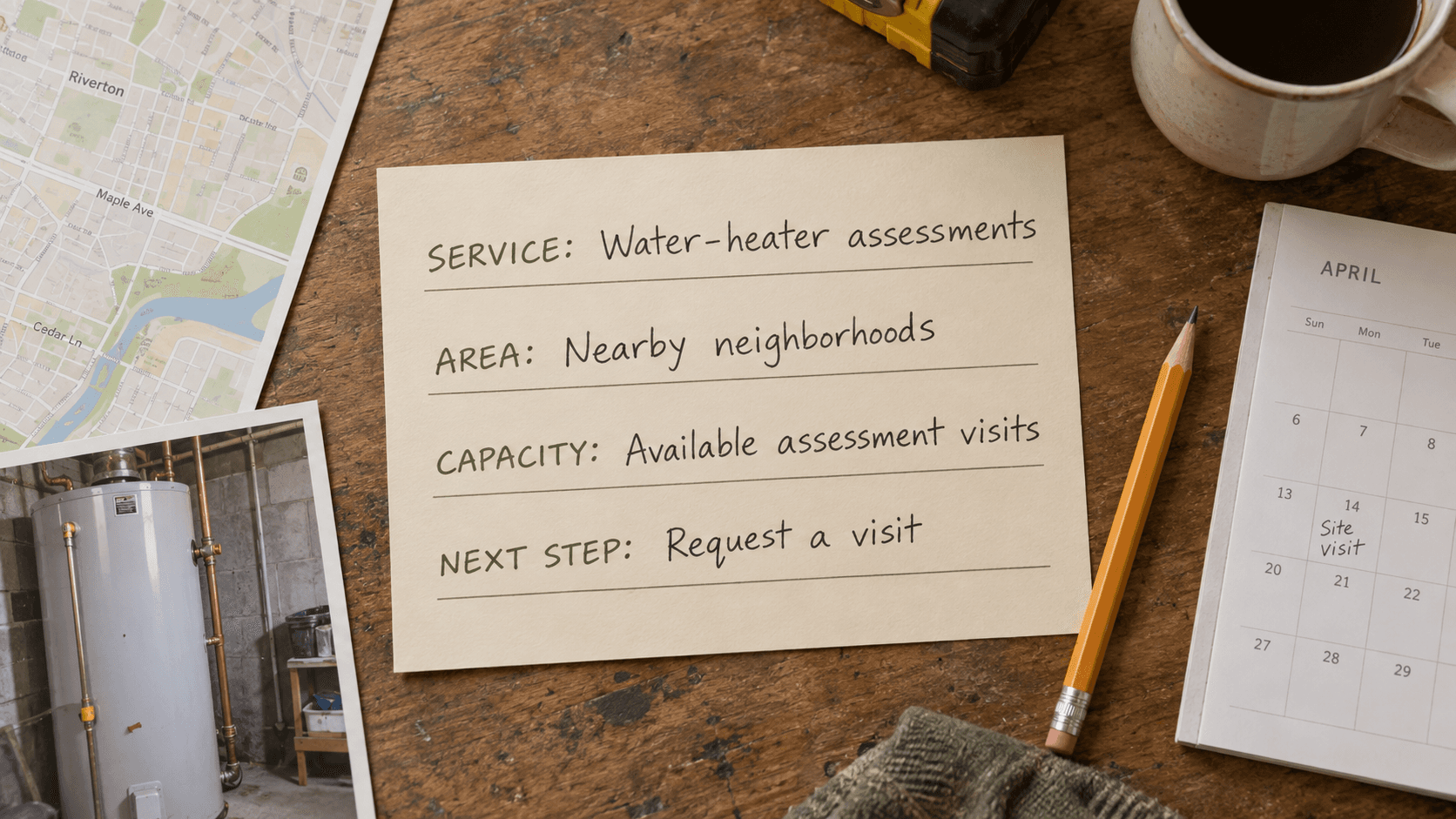
Start with the schedule and your actual services. Choose one campaign objective: fill repair capacity, book replacement assessments, or develop a particular customer relationship. Define the service area tightly enough that travel does not consume the capacity you are trying to sell.
| Work you want | What the customer is looking for | What the campaign should explain |
|---|---|---|
| A current plumbing problem | Whether you can help at that address | Service area, request process, and availability limits |
| Water-heater replacement | How to understand options and cost | The assessment and proposal process |
| Planned fixture or remodel work | Someone who can review a defined project | Scope review, project timing, and estimating |
| Property-management work | A reliable service relationship | Properties served, authorization, access, and communication |
Do not promise every service to every caller just to make the lead count bigger. Clear exclusions can save the customer a wasted conversation and give your team more time for work it can complete.
Make local search your service directory
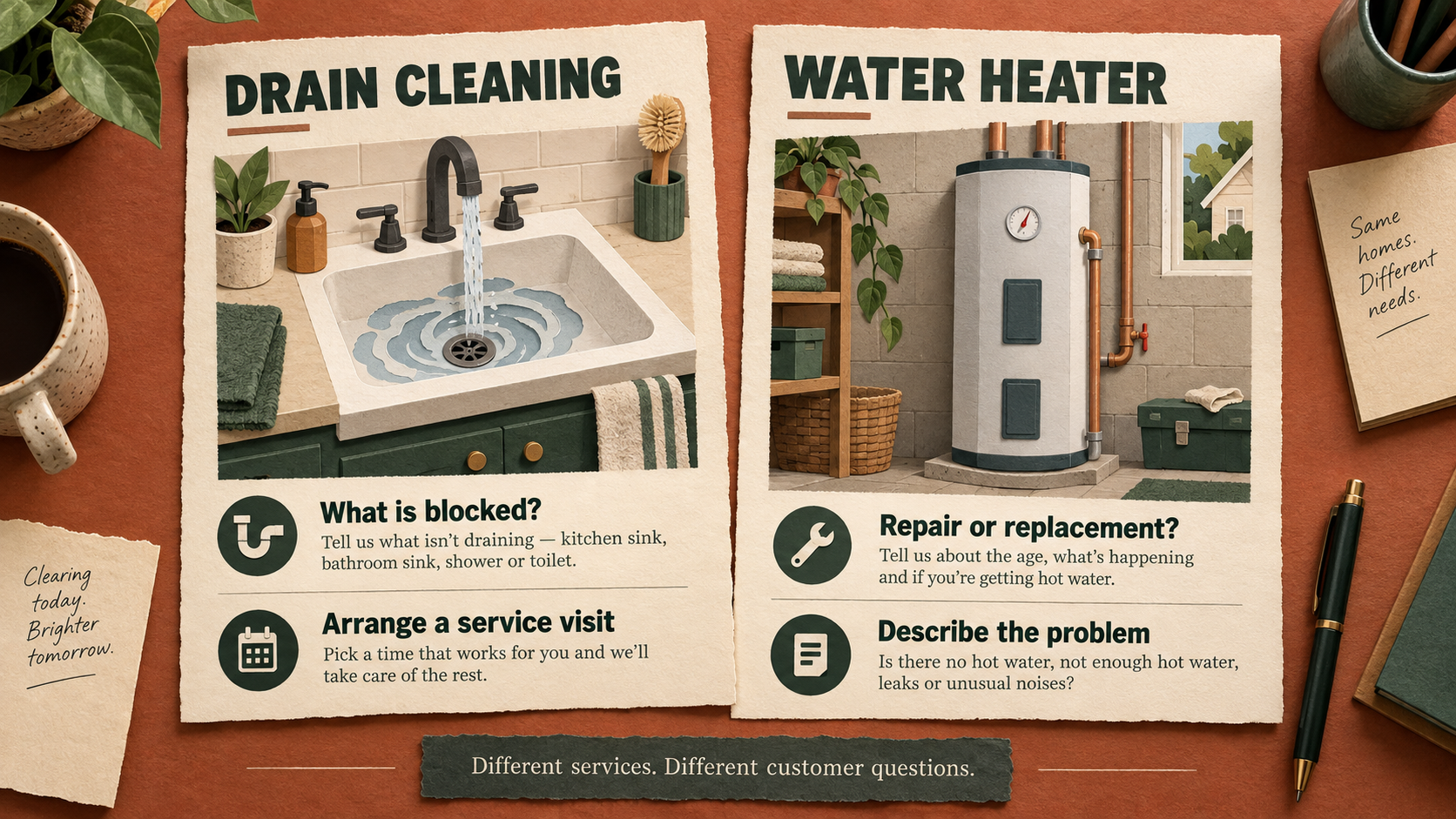
Use your website to explain each meaningful service in the language a homeowner uses. A drain-cleaning page should not be a lightly edited version of a water-heater page. It should answer the questions that change whether someone contacts you and what happens next.
Google’s Business Profile guidelines require an accurate real-world business presence. A page mentioning a nearby city is not a reason to invent a branch office there. Google’s local-ranking guidance also includes distance, so a broad list of city names does not guarantee visibility in all of them.
Build service pages around real coverage and evidence: what you handle, the type of visit, relevant photographs, common customer questions, and a working phone or request form. Put the location context where it helps the customer. The local SEO guide covers how to avoid turning this into a batch of repetitive city pages.
Compare paid lead channels by completed work
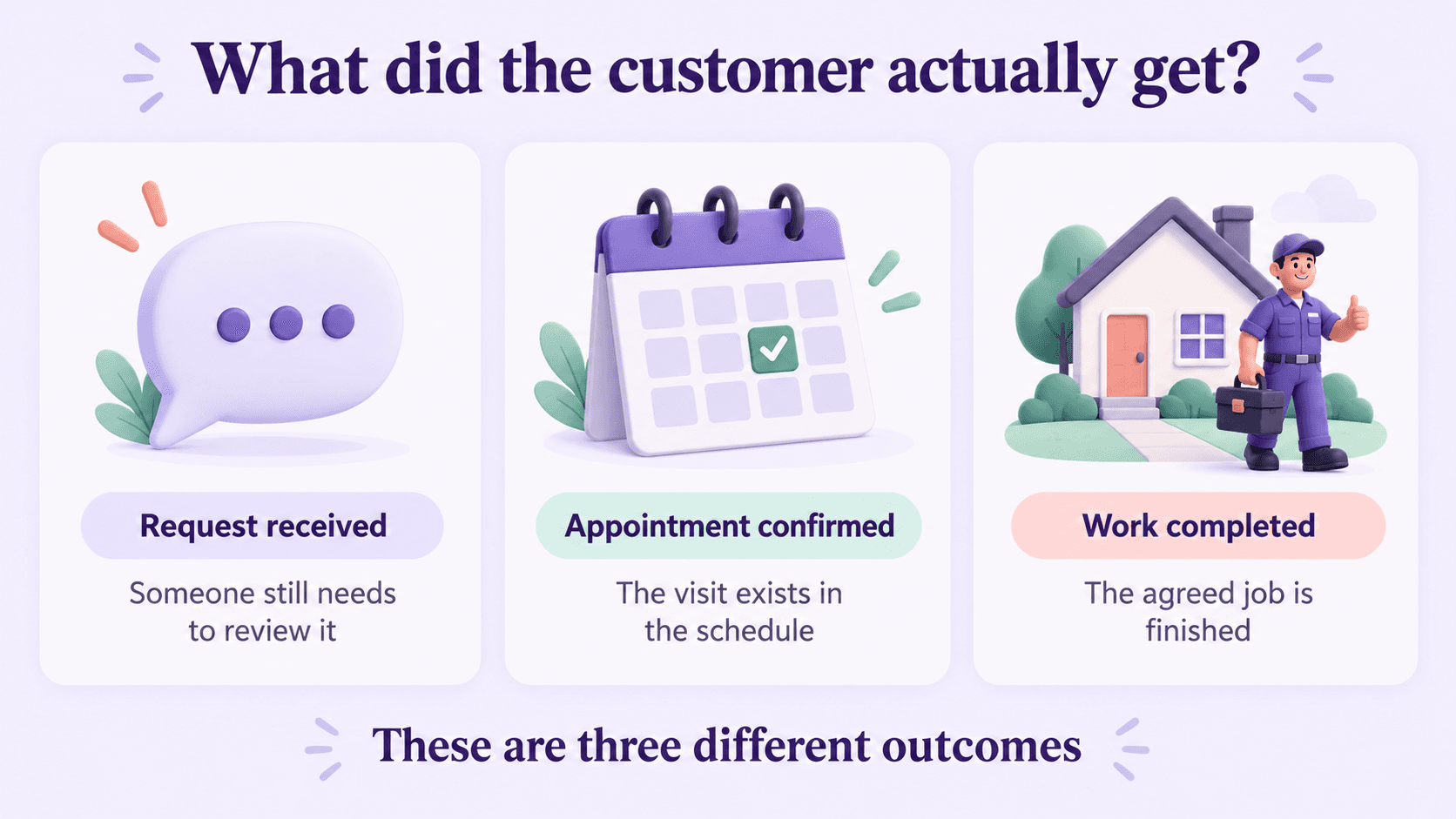
Local Services Ads and search ads have different charging and reporting models. For Local Services Ads, Google charges for valid leads; that does not mean every charge represents a scheduled or completed repair. A pricing inquiry can be valid even when the customer is still deciding.
Before buying leads, answer these questions: Which services and areas are included? Who receives the calls and messages? What counts as a lead? How do you identify repeat contacts? Where is the final job outcome recorded? Do not compare two providers’ lead prices until you understand those definitions.
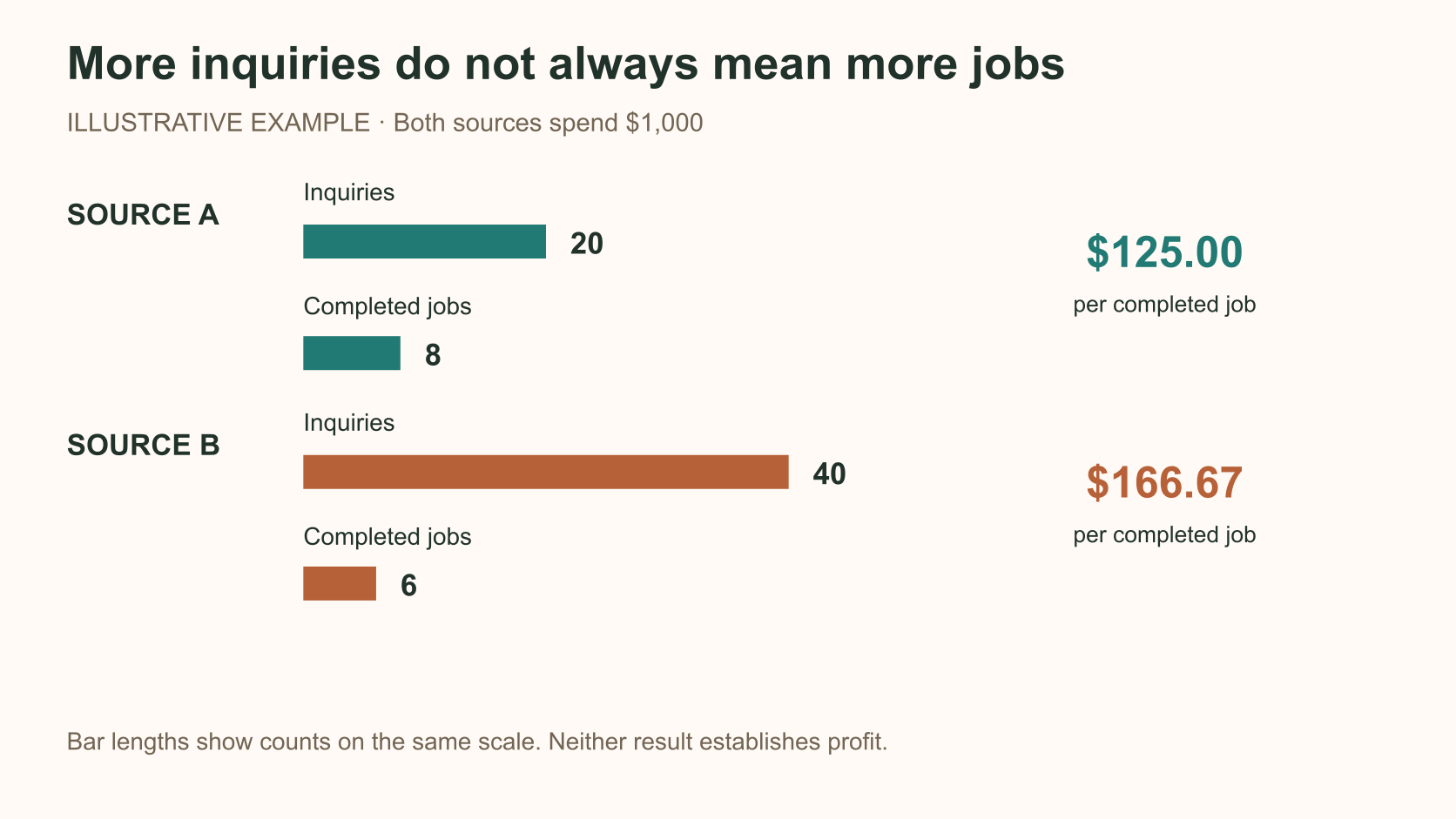
An illustrative comparison: source A costs $1,000 for 20 inquiries and eight completed jobs. Source B costs $1,000 for 40 inquiries and six completed jobs. Source B produces cheaper inquiries; source A produces cheaper completed jobs in this example. Neither result tells you profit until you also inspect the work sold and its costs.
Use the Local Services Ads guide for Google’s lead handling and the call-tracking guide for comparing outcomes across sources.
Make referrals easier to act on
A referral should land on a clear next step. Give the referring customer a useful service link or business contact to share, then ask the new customer what they need without making them retell the referral story to several people.
For property managers, the first conversation may be about your service relationship rather than one immediately bookable job. Keep the manager, service property, authorization contact, and access person distinct. That is part of converting the lead, not a reason to call it unqualified because it did not book on the first call.
You can ask satisfied customers for honest feedback and referrals through your approved process. Do not present a generic request for a public review as proof that referrals caused a new job. Ask how the customer found you and retain the campaign or referring context where available.
Close the gap between a new call and a visit
The first response should use what the customer already provided. If the form says the water heater is leaking and includes an address, the next conversation should establish the missing details and appropriate visit—not restart the form aloud.
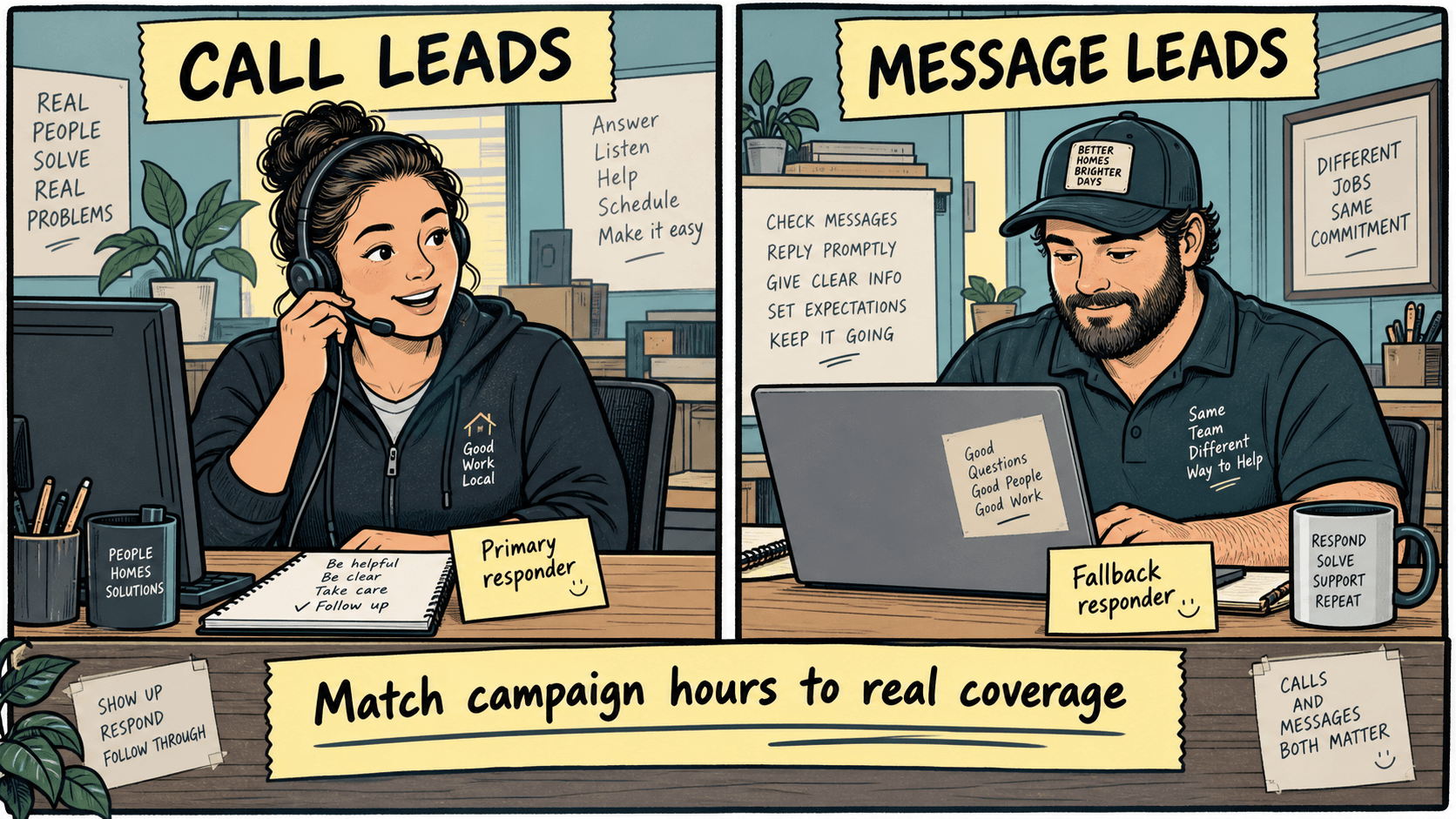
When the office is closed, be specific about coverage. Answering a phone does not establish that a plumber is available overnight. A future booking, an on-call review, and a morning callback are different outcomes. Keep the customer’s expectation and the next owner in the record.
For repair requests, measure whether eligible callers received a suitable next step. For replacement work, measure assessments, proposals, and later decisions. The lead-conversion guide explains how to find the point where a useful inquiry stalls.
Review lead quality without blaming every loss on the source
Group the reasons a request did not become work: wrong service, outside area, unavailable appointment, unresolved approval, price or scope question, no response, or another provider chosen. If most failures are wrong-area calls, revisit targeting. If callers qualify but wait for your reply, the source may be doing its job.
Start with a small, traceable campaign. Review the calls or written conversations, not just a dashboard total. Give open replacement proposals time to mature and avoid treating an inquiry from yesterday as a lost installation sale.
CentralComs is relevant when the gap is answering, booking, or following up under your business rules. Compare it using actual plumbing inquiries and the records left behind, alongside the other AI receptionist options.
Frequently asked questions
Should a plumber buy leads or invest in SEO?
The two serve different purposes. Paid channels can test demand with a defined budget; useful local pages and an accurate profile support discovery over time. Compare completed work and total acquisition effort rather than choosing from lead price alone.
Should every town get its own plumbing page?
Only create a separate page when it gives the reader useful, truthful information beyond a swapped city name. Explain real coverage, services, and relevant local work. Do not imply a physical office that does not exist.
What is a good plumbing lead conversion rate?
Define the denominator first: all contacts, qualified inquiries, booked visits, or proposals. Then compare similar services and time periods in your business. A national headline cannot tell you whether your rental approvals or replacement proposals are being handled well.
Sources and further reading
Sources checked . Check current plans and documentation before choosing a service.