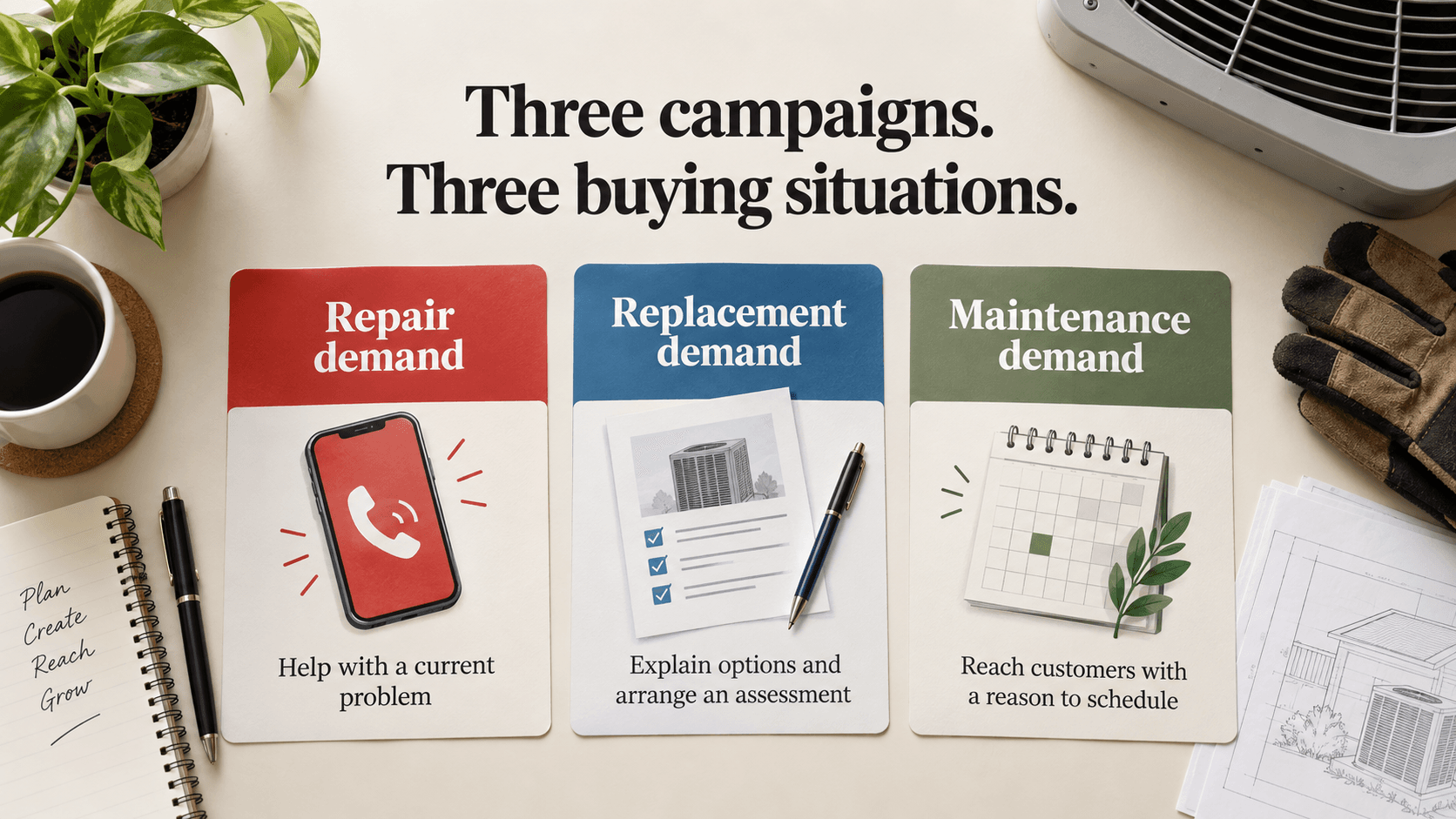
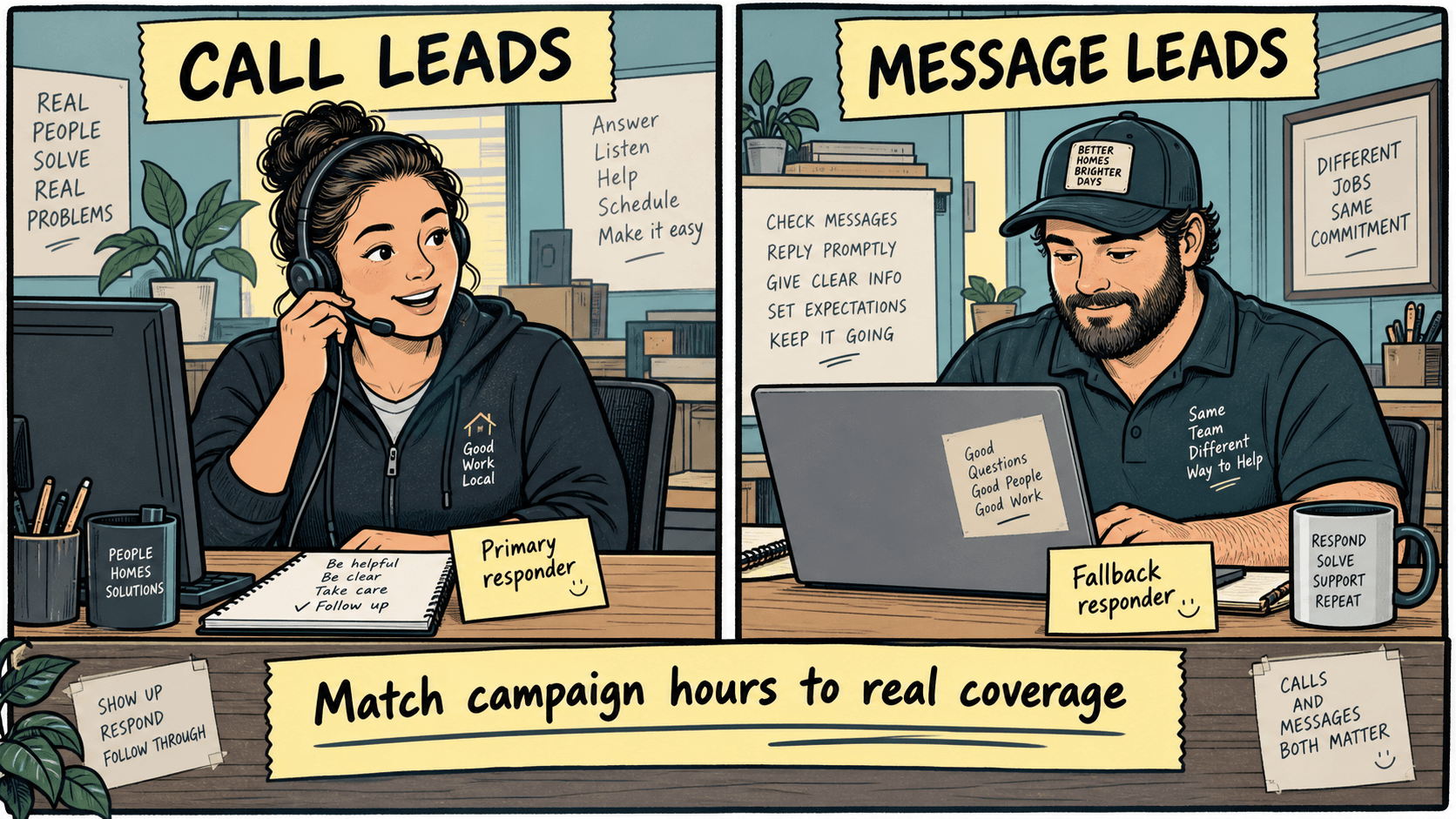
Home services marketing needs to do two jobs: bring in the right inquiries and help those customers reach a booked visit. Start by choosing the work you want more of. Then connect each campaign to a relevant page, a useful response, and a way to measure completed jobs.
If you are paying for advertising but cannot say which campaigns produced finished work, start there. A report showing calls, form submissions, and clicks gives you part of the picture. It does not show whether the caller needed a service you offer, whether your team could book it, or whether the visit happened.
Build the plan around the work you want
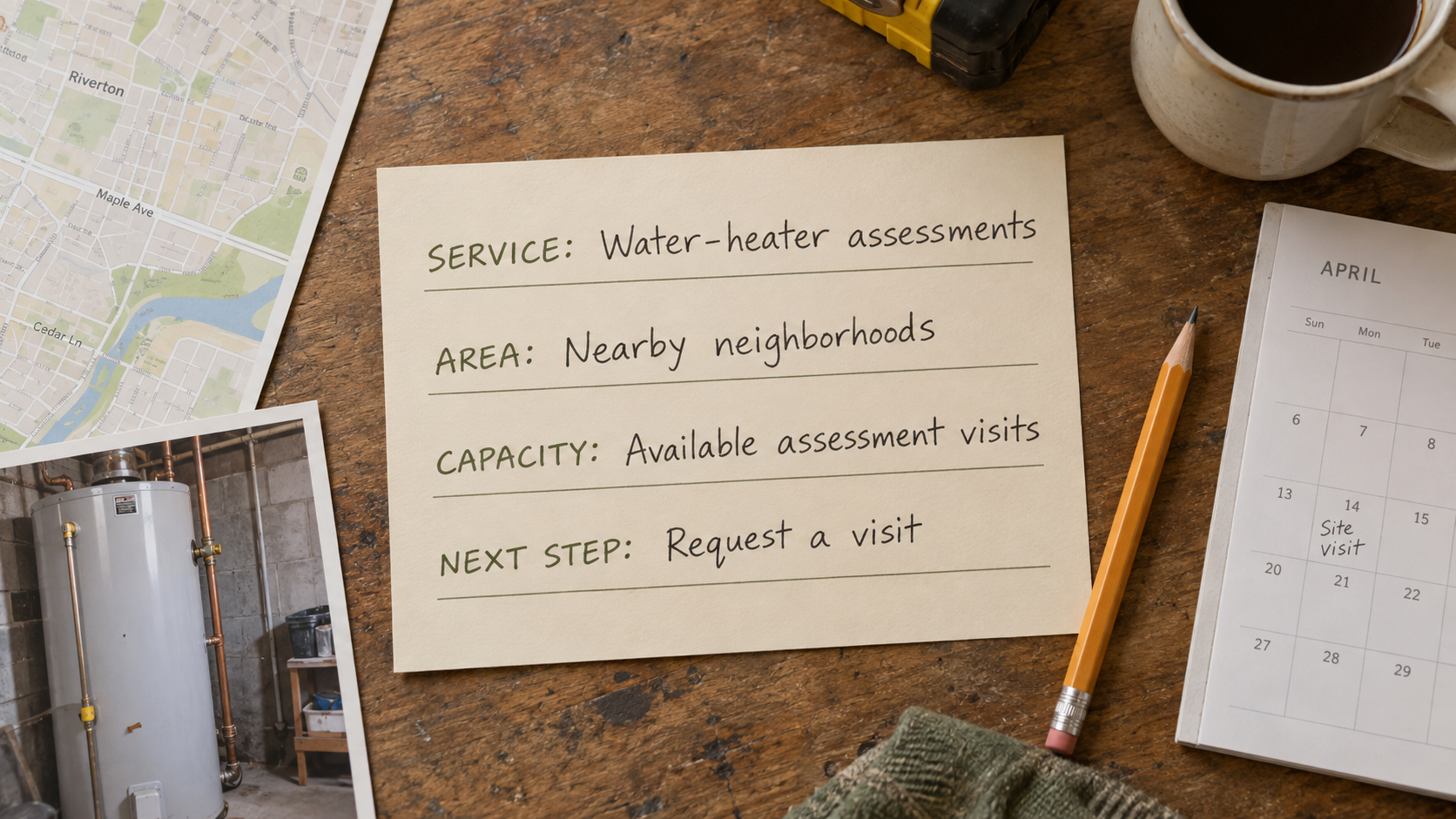
A plumbing company with installation capacity needs a different campaign from one trying to fill tomorrow’s repair schedule. The same applies to an HVAC contractor selling maintenance agreements and an electrician looking for remodel projects. Write down the service, area, available capacity, and kind of customer before choosing the channel.
Use a simple campaign brief: “We want more water-heater replacement assessments in the neighborhoods we can serve efficiently.” That is specific enough to shape the ad, page, phone conversation, and report. “We need more leads” leaves all four decisions open.
Choose channels by the customer’s situation
| Channel | Useful starting situation | What the customer needs next |
|---|---|---|
| Local search | A homeowner looking for a nearby provider | A clear service page and a way to contact or book |
| Local Services Ads | A customer ready to describe a job | A useful answer to the call or message |
| Paid search | A specific service or project search | A page matching that exact request |
| Past-customer campaigns | A documented service need or agreed check-back | A relevant offer and someone to handle replies |
| Referrals | A customer comes through a trusted introduction | Recognition of the request and a straightforward next step |
Google’s local-ranking guidance emphasizes relevance, distance, and prominence. Treat local search as an investment in an accurate, useful presence. Paid ads can add opportunities, but they do not remove the need for a clear offer or available appointments. The Local Services billing rules also make an important distinction: you pay for valid leads, not a guarantee of completed jobs.
Do not turn every channel on at once. Choose one acquisition channel and one existing-customer opportunity, give each a responsible person, and make the results traceable. Add channels once you can explain where the current inquiries go.
Make the page match the promise
A homeowner who clicks an AC repair ad should arrive on a page about getting help with an AC problem. A replacement shopper needs an explanation of the assessment, options, and proposal process. Sending both to a general homepage makes them do the sorting themselves.
For each campaign page, answer five questions near the start: what you do, where you do it, what happens after contact, what the visit involves, and how to take the next step. Use real service photographs and relevant customer evidence you have permission to publish. Show a fee only when it applies to that situation. If the job needs an assessment, explain that instead of implying a fixed repair price.
Trade guides go deeper into the differences: HVAC marketing, plumbing lead generation, and marketing for electricians.
Find the stage where good inquiries stall
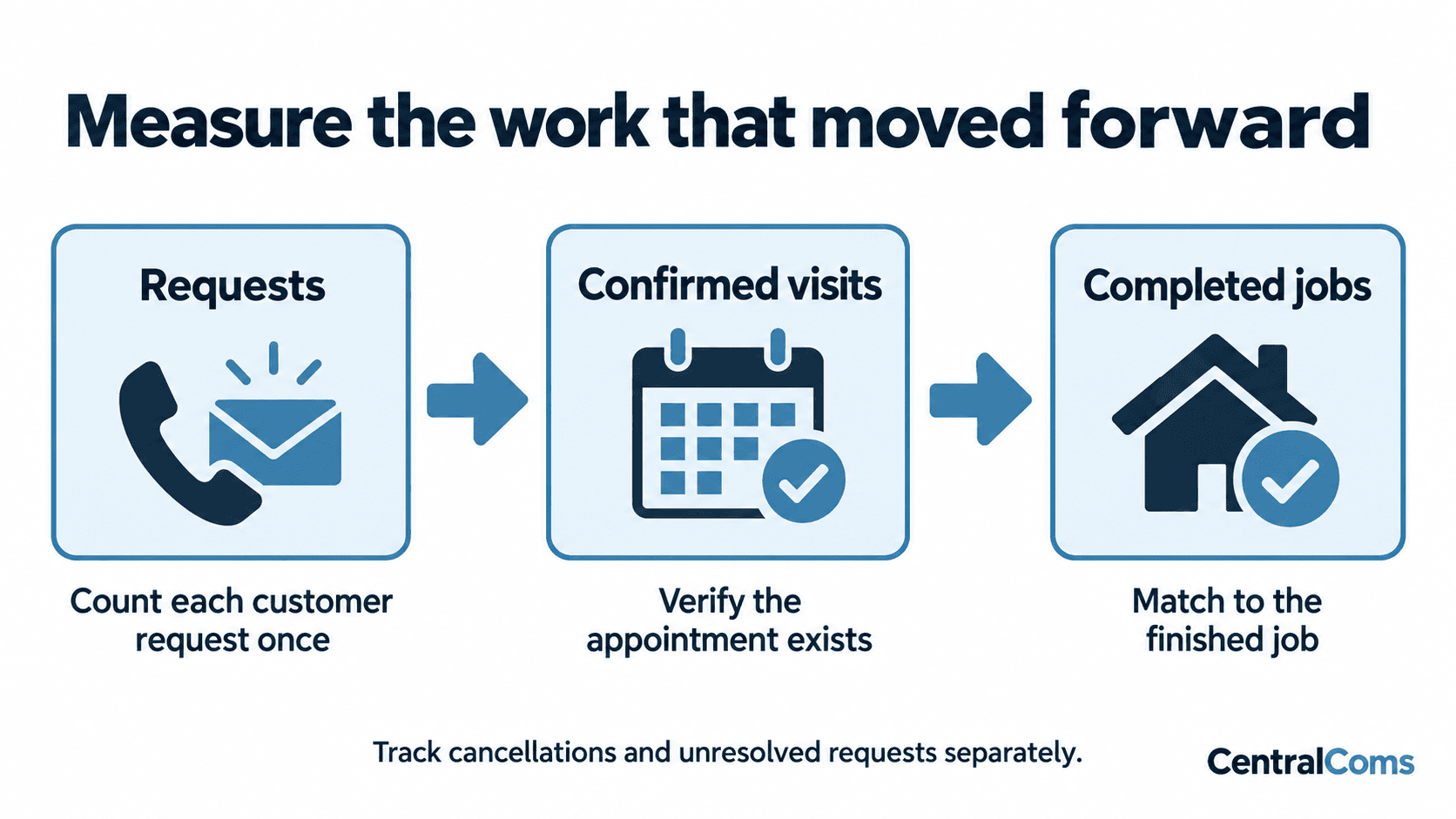
Keep these stages separate: inquiry received, qualified opportunity, appointment confirmed, work completed. Add proposal sent and proposal accepted for projects that need estimating. A repair booking and a replacement assessment can both be worthwhile, but they are not the same commercial outcome.
Jobber’s request metrics, for example, define a converted request in terms of conversion to a quote or job. That is useful workflow information. It still needs to be connected to your completed-work report before you call it revenue.
If inquiries are mostly outside your service area, look at targeting and page clarity. If qualified customers wait for a reply, fix response ownership. If they speak with your team but cannot get a suitable time, review capacity and the offer. If quotes sit open, inspect unanswered customer questions. Each cause leads to a different change.
Compare cost per completed job
An illustrative campaign spends $1,000, generates 20 leads, and produces eight completed jobs. Its lead cost is $50 and its cost per completed job is $125. Another spends the same $1,000 for 40 leads but produces six completed jobs. Its lead cost looks better at $25, while its completed-job cost is about $166.67.
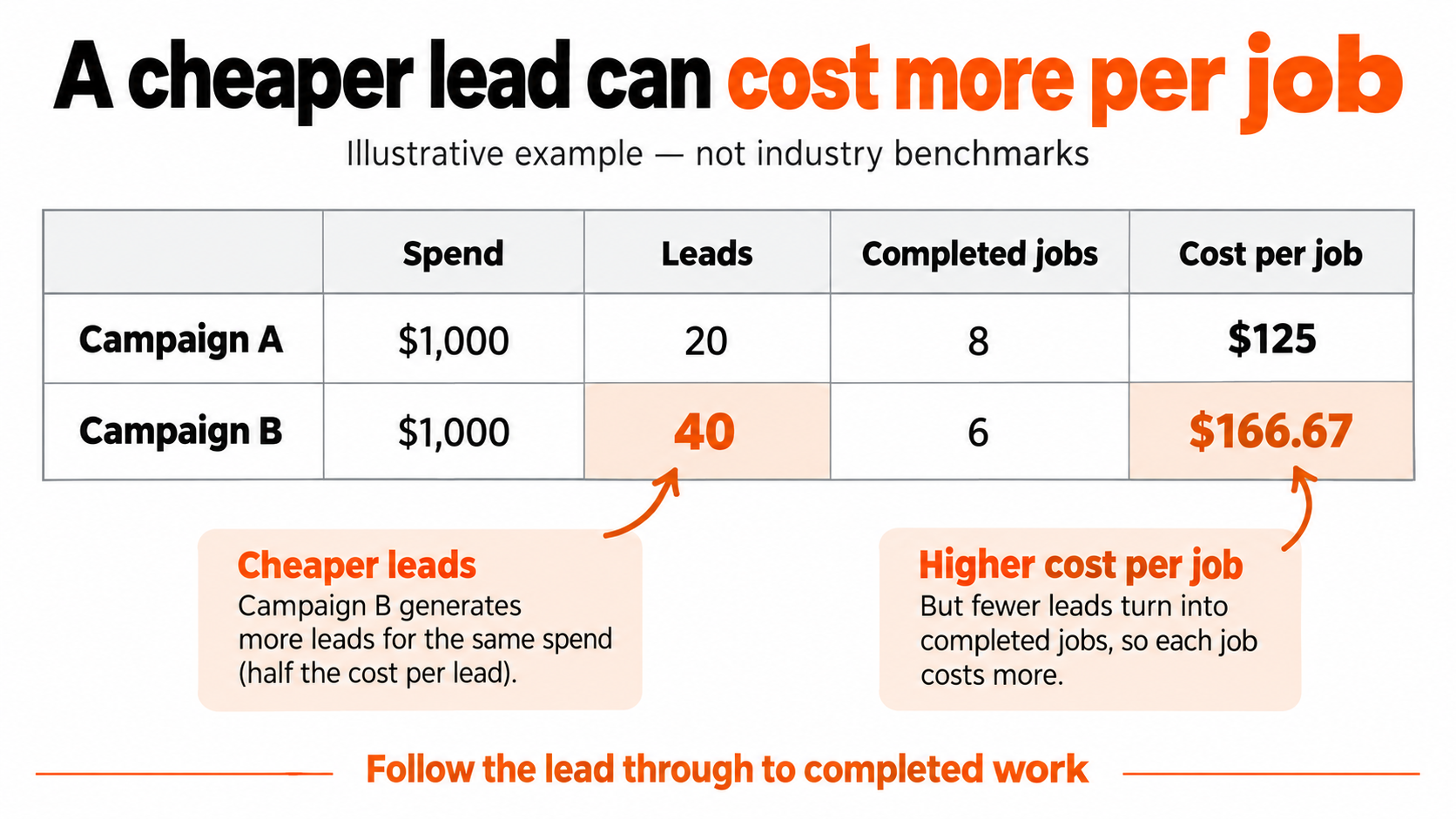
These are example inputs, not industry averages. They show why a cheaper lead does not settle the buying decision. Also compare the kind of work, collected revenue, direct job costs, and the time your office spent handling the inquiries. A small repair and a large installation should not share one target acquisition cost simply because both started with a phone call.
Use the call-tracking guide to connect channel records to appointments. Keep your marketing spend and outcome dates consistent; a project that takes weeks to decide should not be judged as a failure the day it arrives.
Use research as context, then inspect your business
Jobber’s 2026 trends report surveyed 1,050 U.S. home-service business owners. It covers lead generation, quoting, communication, and AI adoption. That makes it useful context for the choices owners are making, but its owner-reported findings are not a controlled test showing that any particular tool causes growth.
Your own record should decide the next improvement. Review a manageable sample of recent inquiries with the person who answers calls and the person who runs the schedule. Read what the customer wanted, how the team responded, and where the request ended. Start with the repeated problem that is both costly and fixable.
A 30-day marketing reset
- In the first week, choose a service and map its current inquiries through to completed work. Record the gaps instead of guessing at them.
- In week two, repair the campaign page, contact path, and response responsibility. Test a call and form submission yourself.
- In week three, run a limited campaign that fits the available schedule. Review qualified inquiries and unresolved conversations each day.
- In week four, compare completed work, acquisition cost, and staff effort. Keep the changes that improved the actual customer path before increasing spend.
CentralComs fits the response and follow-up part of this plan. The useful question for a demo is whether it can take a customer from their request to the right next step under your rules. For the broader buying decision, see the AI receptionist comparison.
Frequently asked questions
What is the best marketing channel for a home-service business?
It depends on the service, market, capacity, and customer situation. Start with a channel that reaches the work you want, then measure qualified inquiries and completed jobs. A channel with a low lead price can still produce poor economics.
Should we fix lead response before spending more on ads?
If qualified inquiries are waiting without an owner or next step, fix that process first. If response is working but there are too few suitable inquiries, acquisition may be the priority. Use your recent records to distinguish the two.
How much should we budget?
Work backward from the jobs you can serve and the acquisition cost your own job economics can support. Include campaign production, advertising, and lead-handling costs. A universal percentage of revenue is too blunt for every service and growth stage.
Sources and further reading
Sources checked . Check current plans and documentation before choosing a service.