Electrical marketing works best when the offer matches the kind of work the customer wants. Separate an existing electrical problem from a planned charger, lighting, panel, or remodel project. Each needs a clear service page, an appropriate first conversation, and a different measure of progress.
The common mistake is to send every search to a page that lists everything the company does. A homeowner then has to work out whether you handle their project, whether an assessment comes first, and what they should ask for. The campaign can make those decisions easier.
Choose a service market before choosing the ad
Pick a service your team actually wants and has capacity to deliver. Define the area, customer type, and first appointment. Residential service calls, planned improvements, and work with builders can all matter, but they do not share one buying process.
| Opportunity | Useful page content | First commercial milestone |
|---|---|---|
| Existing electrical concern | Services handled, area, request process | A suitable service visit or review |
| Home EV charging | Assessment process, parking and property questions | Qualified assessment booked |
| Lighting or remodel project | Relevant work, scope review, coordination | Project discussion and proposal |
| Larger electrical upgrade | Evaluation and proposal process | Assessment completed and scope established |
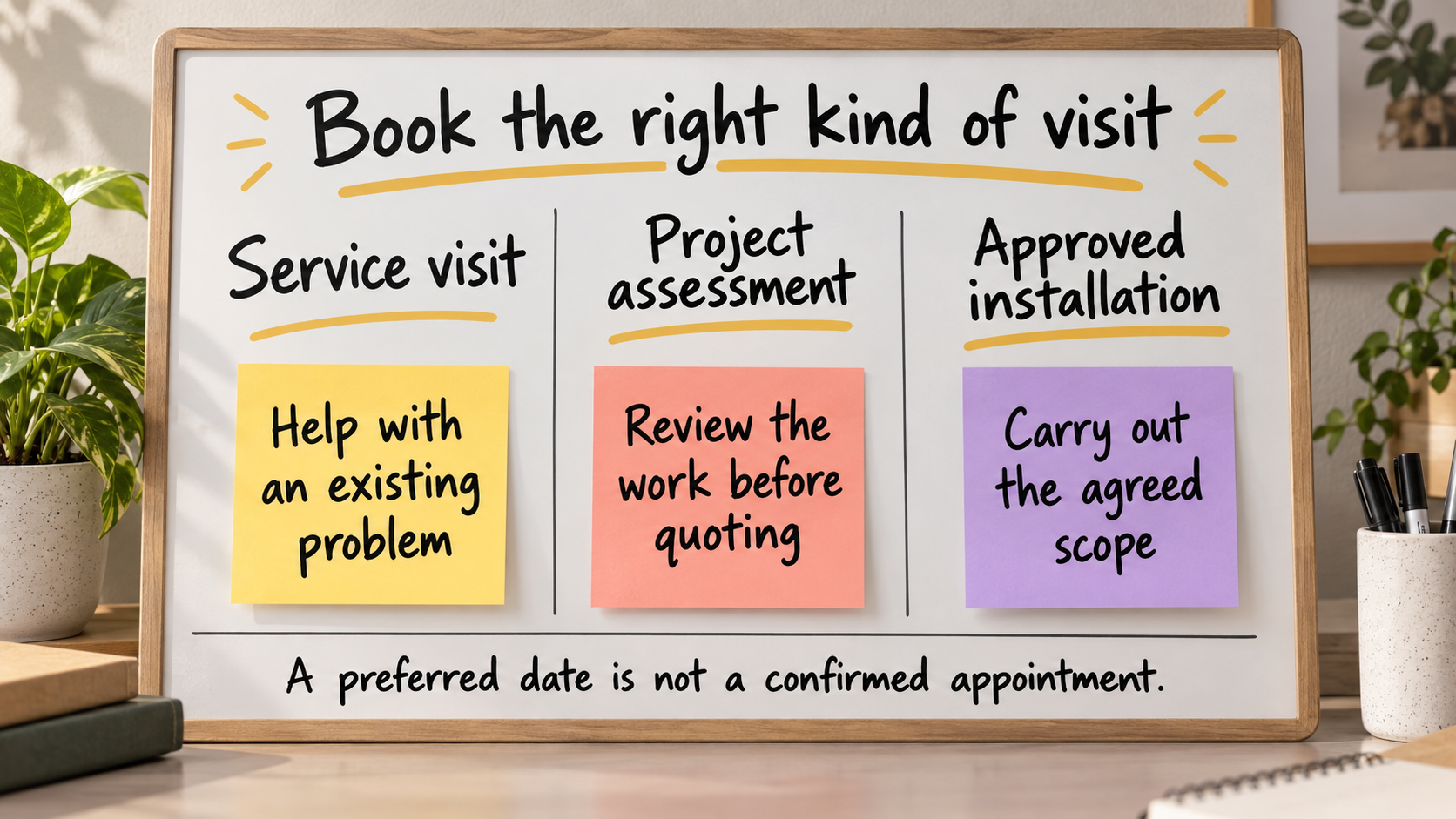
Do not use an online booking to imply that all project decisions are settled. Calling an appointment an “assessment” tells the customer something different from calling it an “installation.” That wording belongs in the ad, page, and confirmation.
Build an EV-charger page around the assessment
The U.S. Department of Energy’s home-charging guidance explains that home electrical capacity and charging equipment affect installation considerations. A useful contractor page can therefore explain why an assessment may be necessary without offering a universal installation price or diagnosing the home online.
Ask for information that helps arrange that assessment: property address, intended parking location, ownership or authorization, and the customer’s project goal. Have the qualified team decide what the installation requires. Avoid turning the lead form into technical instructions or asking the homeowner to inspect energized equipment.
Show genuine completed-project examples when you have permission, with enough context to help the reader understand the work. A photograph alone does not prove the same scope or price will apply to their home. State what happens during the assessment and how the proposal is reviewed.
Use local search to show fit and credibility
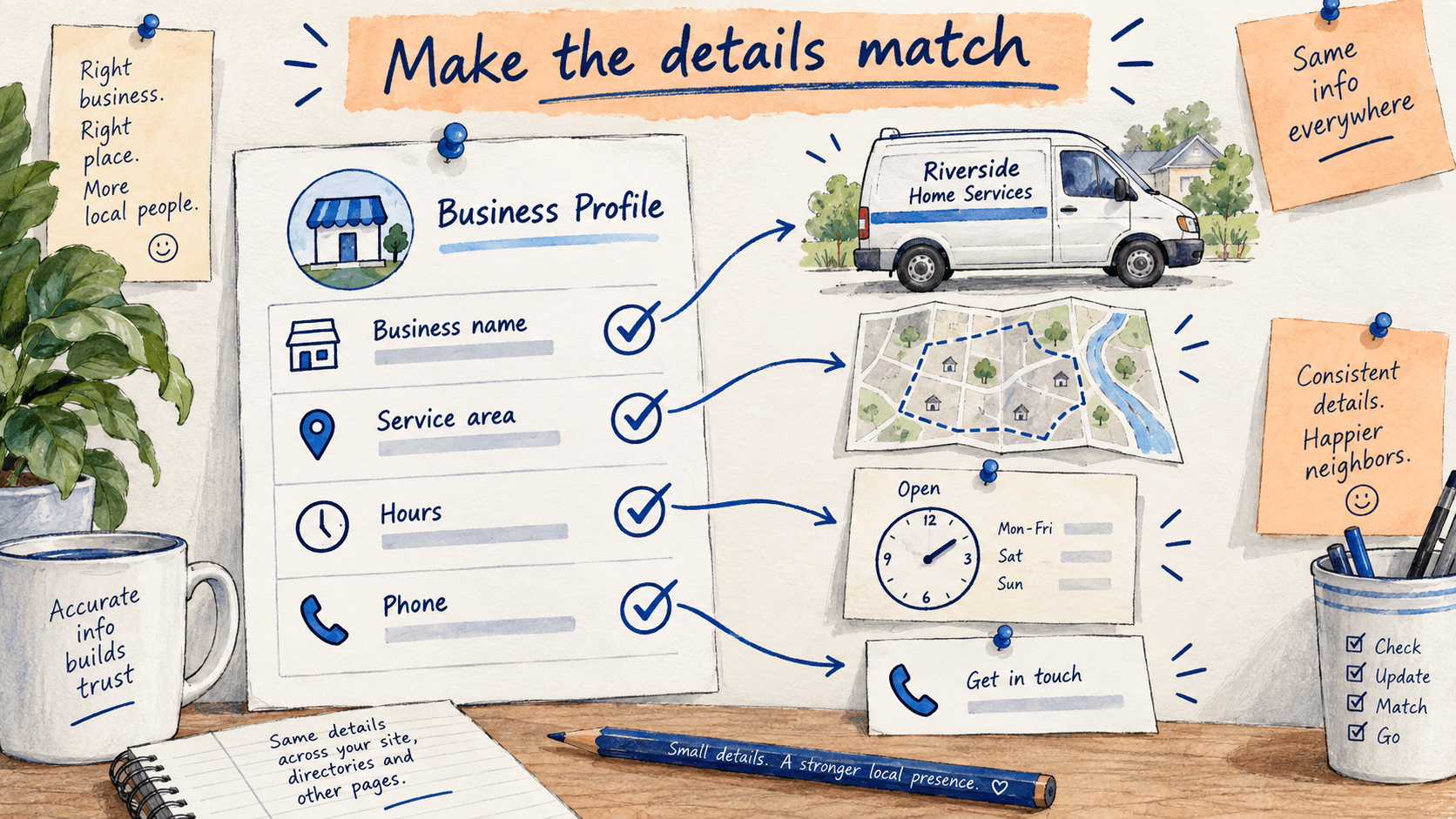
Google’s local-ranking guidance centers on how well the business matches the query, distance, and prominence. Keep your profile accurate and support it with service pages that answer actual customer questions. Use the business name you operate under; do not add a string of service keywords to make it look more relevant.
Google’s representation rules also matter for service-area businesses. Advertising work in a city does not mean you can create a profile for a fictional office there. Describe where you serve customers honestly and make contact details consistent.
For the website, write a page when the service has a distinct decision process. A charger assessment deserves different content from a lighting project. A batch of near-identical city pages is not a substitute for explaining the work. See the local SEO guide for a practical page audit.
Match paid campaigns to the right conversion
An ad for service work can lead to an eligible service visit. An ad for a project may lead to an assessment, then a proposal, then an acceptance. If both campaigns are judged only on immediate booked jobs, the project campaign may appear weak before its decisions have matured.
For eligible Local Services campaigns, read Google’s lead-charging definitions before deciding that every unbooked request should be credited. A customer researching a relevant project can still be a valid lead. Keep your own commercial outcome alongside the platform’s lead status.
Track the service requested and the promised next step. Exclude unrelated job inquiries, vendor calls, and duplicate contacts from the same opportunity when reporting new demand. Record those contacts separately rather than deleting them from the phone log.
Make project follow-up part of marketing
The inquiry is only the start of the sale. A homeowner might be waiting for a remodel schedule, another decision-maker, or an answer about scope. A reminder that only says “still interested?” does not help resolve any of those questions.
Keep the current proposal and last customer question together. If the requested location or work changes, assign an estimator review before asking for approval again. For ready-to-use messages and stopping rules, see contractor estimate follow-up.
A clear next step can be: “We’ll arrange a call with the estimator about moving the charger location.” That records progress without implying a new price or installation date. This is where a communication tool should help the existing process rather than create another disconnected inbox.

Review the results by service and stage
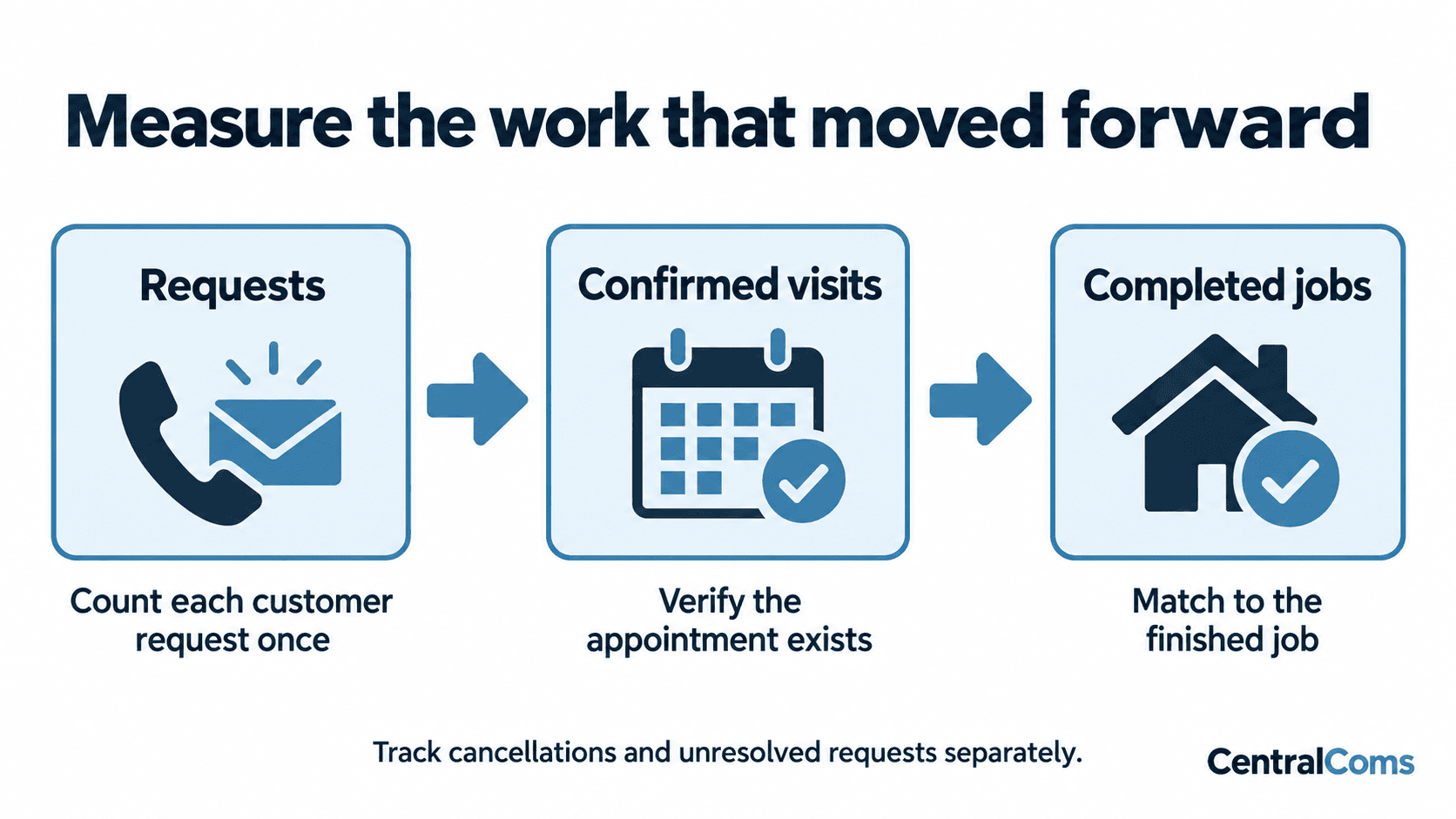
Use one campaign record through inquiry, assessment, proposal, acceptance, and completed work. Compare the elapsed time and losses at each stage. An assessment that does not turn into a proposal is a different problem from an unanswered proposal question.
For a limited campaign, review the first group of real inquiries with the estimator. Were the projects in area? Did the page describe the service accurately? Did the form collect what was needed to arrange a useful assessment? Did the customer get the promised reply? Those findings should shape the next version of the page and ad.
Use call tracking to preserve the source and the lead-conversion framework to diagnose the stage. Do not count the same homeowner’s form, phone call, and follow-up text as three separate project opportunities.
Frequently asked questions
What should an electrician advertise first?
Choose a service with available capacity, a clear customer need, and a defined first step. Build the campaign and measurement around that service before expanding. The best choice depends on the work your team wants and can deliver.
Should a charger-installation page show a fixed price?
Only if that price accurately describes a defined offer and its conditions. If the home requires assessment, explain the assessment and proposal process. Do not imply that every property has identical installation requirements.
Why are project leads taking longer to convert?
They may require an assessment, proposal, approvals, or coordination with other work. Track those stages and unanswered questions. A longer sales cycle does not excuse missing follow-up, but it does require a different reporting window from routine service calls.
Sources and further reading
Sources checked . Check current plans and documentation before choosing a service.