Good estimate follow-up helps a customer make the next decision about a current proposal. Start with the last conversation, find what remains unresolved, and choose a message that addresses it. A delivery check, a scope discussion, and a reminder at an agreed date should not all sound the same.
An estimate that has been open for two weeks can mean several things: the customer never saw it, another person needs to approve it, the scope changed, or the customer is waiting for your team to answer a question. The age alone does not tell you what to send.
Build the list around the decision still open
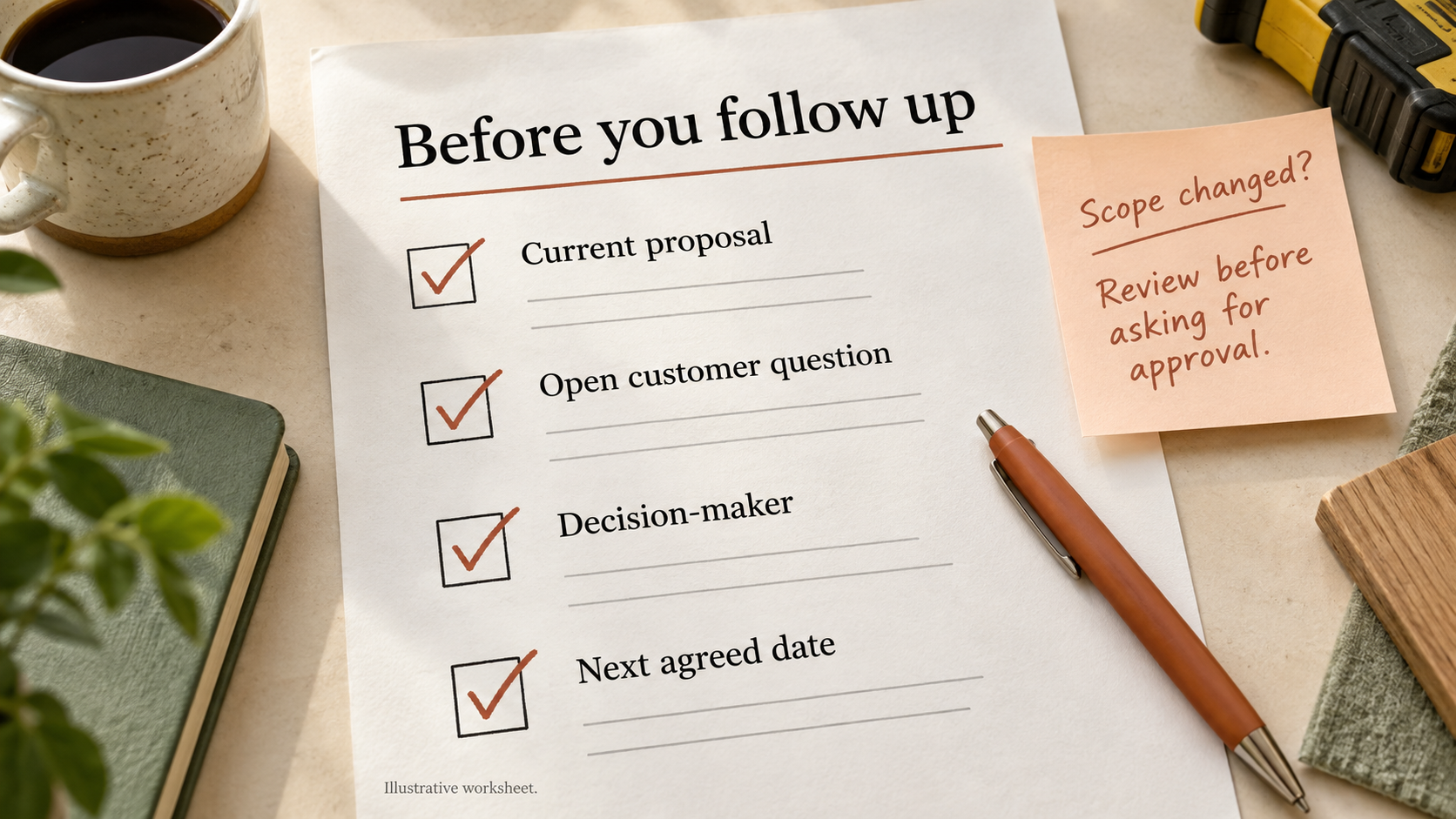
Keep the current proposal, customer contact, last reply, next action, and owner together. Separate quotes awaiting a customer decision from questions or revisions awaiting your team. That makes the follow-up list useful for selling and for fixing your own delays.
| Status | Useful next action | Message to avoid |
|---|---|---|
| Delivery unclear | Confirm the proposal arrived | Pressure to approve something unseen |
| Scope question | Arrange an explanation | Another copy of the same quote |
| Changes requested | Assign an estimator revision | Approval reminder for the old scope |
| Timing agreed | Follow up at that time | Repeated unscheduled nudges |
| Accepted | Complete approval and scheduling | Treating acceptance as finished work |
| Declined | Record the decision and stop | Another “last chance” message |
Ask about the actual proposal
Use the project name the customer recognizes. “Garage charger” or “water-heater replacement” is easier to place than an internal quote number. Include the current proposal link when the customer needs to review it, and check that the link is usable.
Confirm an estimate arrived
Hi [Name], it’s [Your name] at [Company]. Did the estimate for [specific work] reach you? I can resend the current proposal if needed.
Offer help with the decision
Hi [Name], is there anything you’d like us to explain about the [work] estimate? I can arrange a conversation with [Estimator] about the scope and options.
For HVAC replacement, ENERGY STAR advises homeowners to compare itemized proposals, efficiency, and warranties. That is a useful clue about what a scope conversation might need to cover. Explain your actual proposal; do not guess what another company included or offer unauthorized discounts.
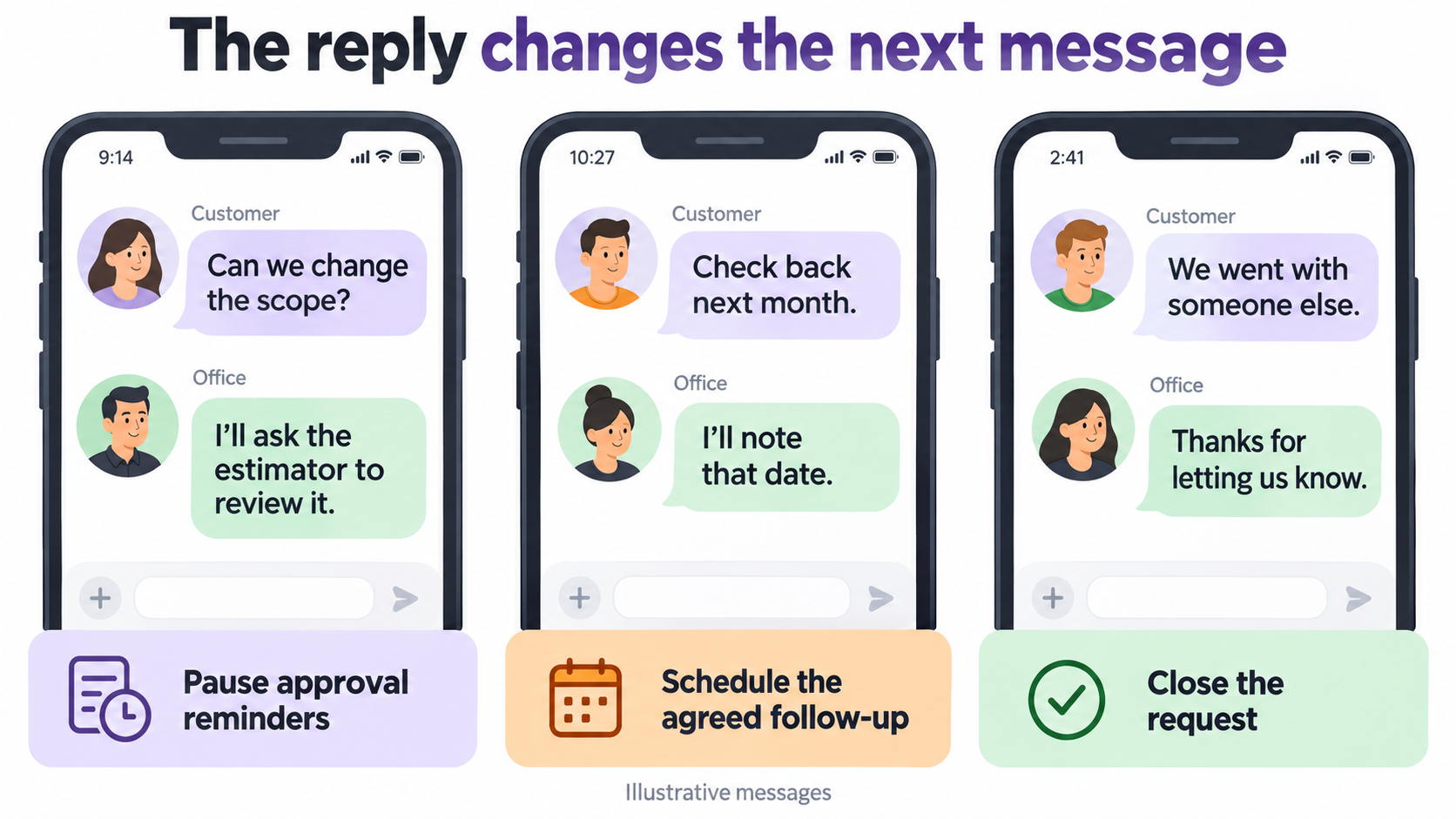
Stop approval reminders when the scope changes
Jobber’s quote-approval documentation says quotes in “changes requested” status are hidden from client hub until handled through its documented revision or response process. That means a customer may literally be unable to act on another approval reminder.
Housecall Pro’s Pipeline documentation describes pausing estimate follow-ups while an estimate is On Hold. The broader lesson applies to a manual list too: a revision needs an owner and a response, not more requests to accept the old quote.
Acknowledge a scope change
Thanks, [Name]. I’ll ask [Estimator] to review [requested change] and confirm how it affects the proposal. We’ll come back to you before asking you to approve the work.
Do not let the message itself agree to a price change, technical requirement, or installation date. Keep those decisions with the people authorized to make them and record the revised proposal before continuing.
Match the follow-up to the trade and project
A plumbing replacement discussion may be about what is included and when the home can be accessed. An HVAC replacement discussion may involve comparing options and comfort concerns. An electrical remodel may depend on other construction work or a changed installation location.
These differences should shape the question you ask. Keep the follow-up process consistent, but ask about the details holding up this particular job.
Follow up on agreed timing
Hi [Name], you asked us to check back around [date] about [project]. Has the timing become clearer, or would you prefer another date?
Help with an approval delay
Hi [Name], is there any information the person reviewing the [work] proposal needs from us? I can arrange the right conversation with our team.
Only name another decision-maker when the customer has identified them. Keep the customer’s contact preferences and the agreed timing in the record.
Use automation for the states it can actually recognize
Jobber’s automation documentation explains its quote-follow-up controls. Before using any provider’s automation, check the eligibility status, channel, timing, and what stops the messages. A feature called “follow-up” does not establish that every reply and revision will be handled correctly in your setup.
Test a quote awaiting response, one with a customer reply, one needing changes, and one already accepted. Check for manually scheduled messages in other tools. Updating the quote in one system does not prove a separate campaign stopped.
The team should be able to explain why a customer is receiving a message and who will answer the reply. If it cannot, simplify the process before increasing volume.
Complete the handoff after acceptance
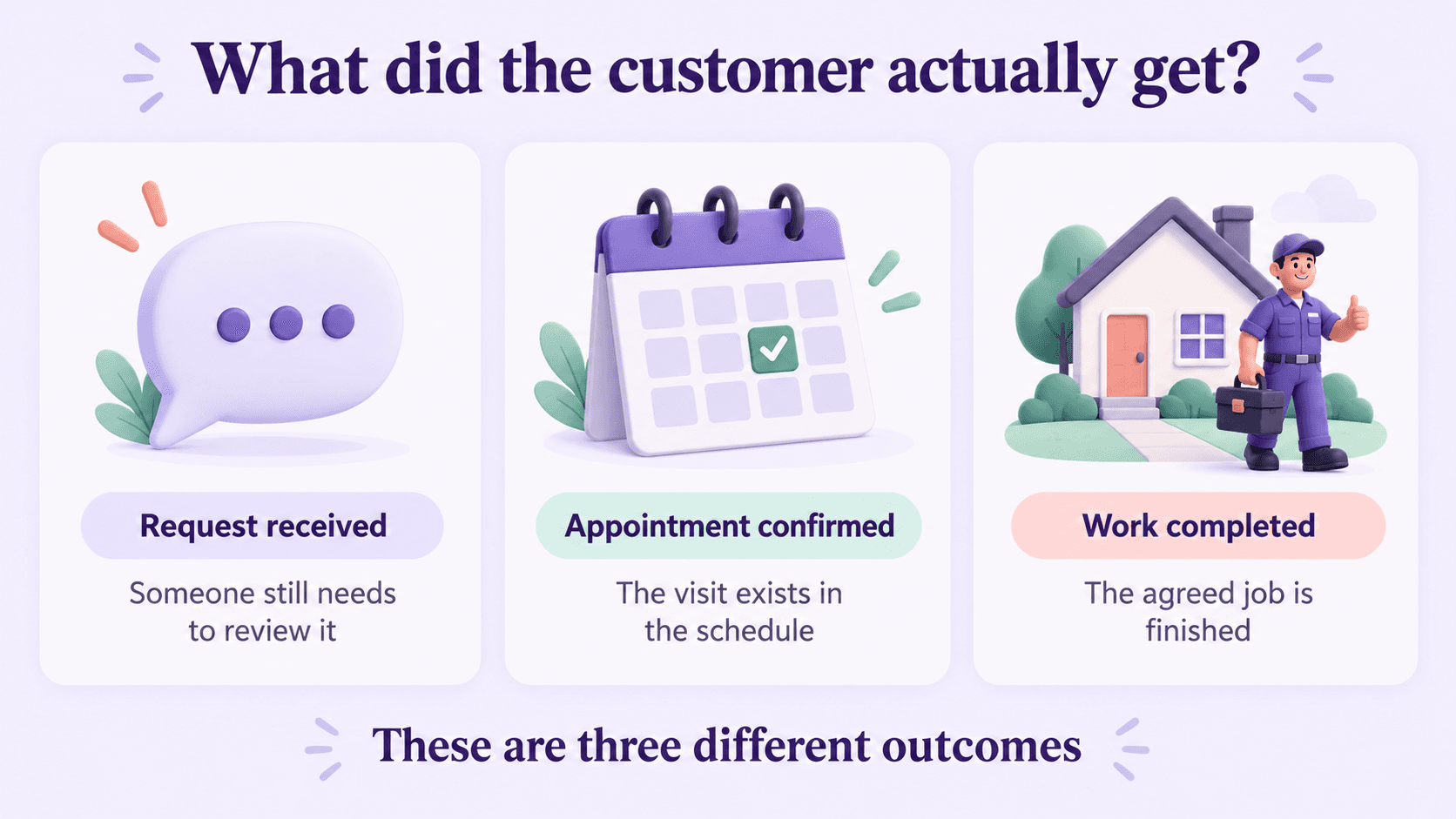
An accepted proposal is progress, but the scheduling and preparation steps still need to happen. Confirm the current scope and any requirements your business uses, then arrange the appropriate appointment. Keep acceptance, booking, and completed work separate in reporting.
After the customer accepts
Thanks, [Name]. We’ve received your acceptance of the [work] proposal. [Office contact] will confirm the next scheduling steps with you. A visit time is not reserved until we confirm it.
Use different wording if a visit has genuinely already been confirmed. The message should describe the record, not a default promise.
Close the loop respectfully
A final unanswered follow-up
Hi [Name], I’m closing the loop on your [work] estimate. If you still need help, reply and we can review the next step. Otherwise, we’ll leave it with you.
Stop after a decline or request to stop. Record the outcome so another team member does not restart the same conversation. An unresolved service complaint needs a responsible person, not another sales message.
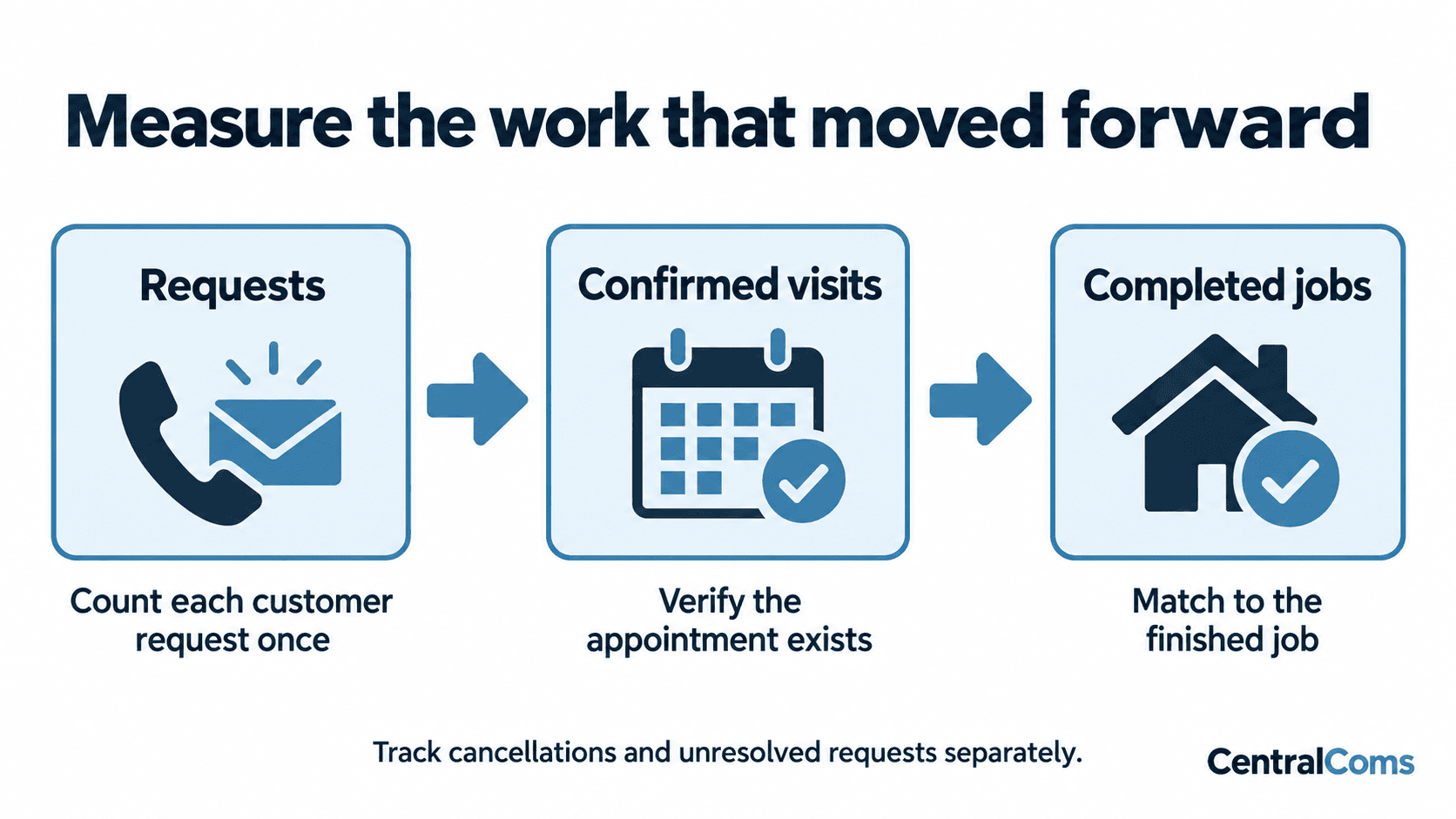
Track replies by reason, proposals accepted, work booked, work completed, and questions waiting on your team. Avoid judging the process only by messages sent or open rates. For the broader customer path, see lead conversion; for channel-to-job measurement, see call tracking.
Frequently asked questions
How often should contractors follow up on estimates?
Use the timing agreed with the customer and what the current proposal is waiting for. If no timing was agreed, start with a short delivery check or offer to answer questions. A fixed sequence should stop or change when the customer replies.
Should we discount an old estimate?
Age alone does not tell you why it is open. First understand the scope question, timing, approval, or competing option. Any change to price should follow your business’s pricing authority and current proposal process.
Can AI handle estimate follow-up?
It can support permitted messages and response routing when the records and stopping rules are reliable. Test a change request and an accepted quote, not only a customer who says yes. Compare those capabilities in the AI receptionist guide.
Sources and further reading
Sources checked . Check current plans and documentation before choosing a service.