To convert more home-service leads, find the point where suitable customers stop moving toward a visit. Check whether the inquiry was answered, qualified, offered the right next step, and followed through. Improving that specific stage is more useful than telling the team to “follow up harder.”
Speed matters because the customer is trying to get something done. But a fast receipt is not the same as useful help. “We received your request” does not answer whether you serve the address, can arrange the right visit, or need an estimator to review the project.
Define the stages before comparing conversion rates
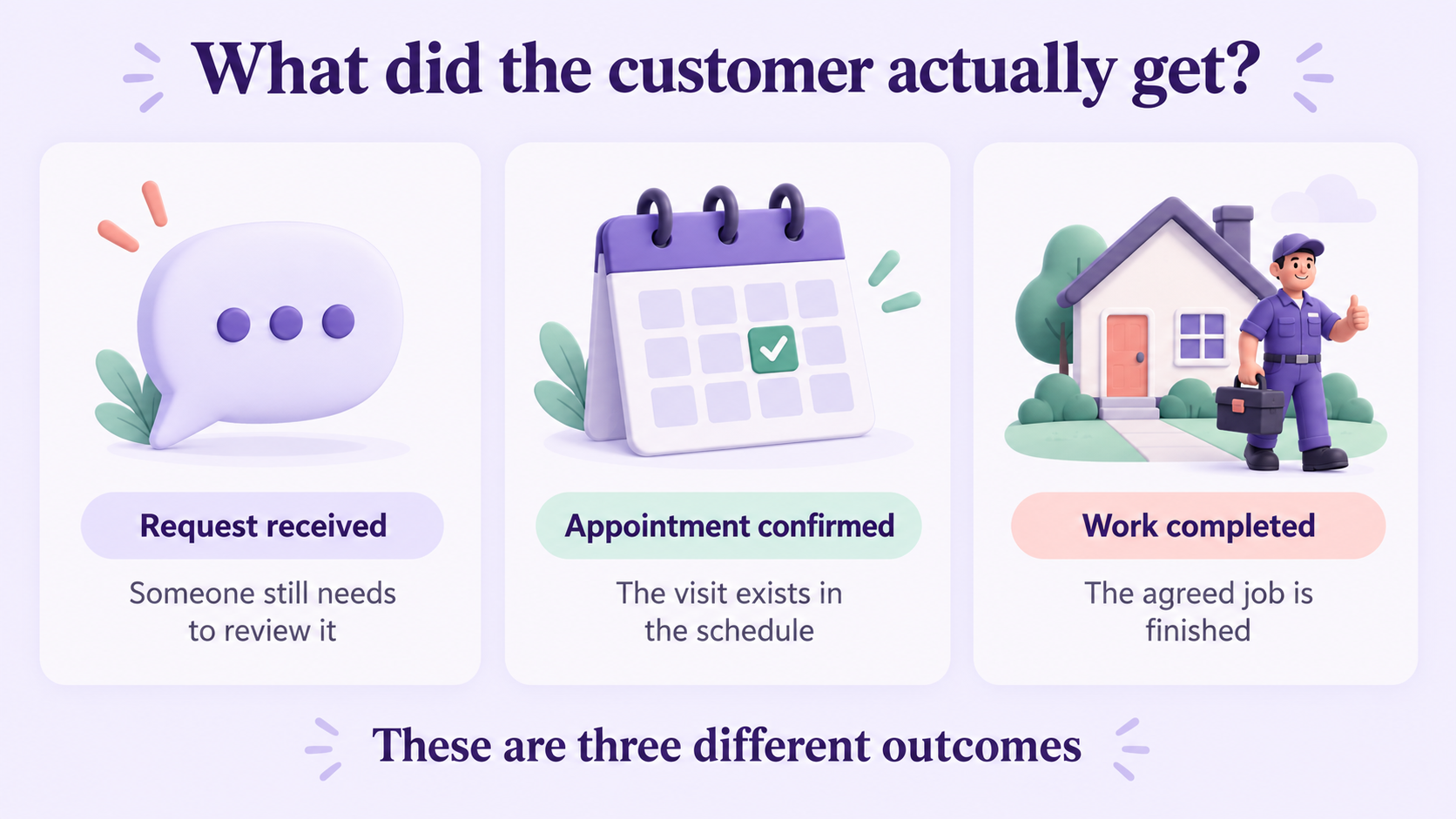
| Stage | Evidence it happened | Common reporting mistake |
|---|---|---|
| Inquiry received | A distinct customer request exists | Counting a form and follow-up call twice |
| Qualified opportunity | The request fits the business’s services and rules | Treating every inbound call as a new sale |
| Useful response | The customer gets an answer or concrete next step | Counting an automatic receipt as resolution |
| Appointment confirmed | The agreed visit exists in the schedule | Counting a preferred time as a booking |
| Work completed | The agreed job has finished | Treating a booking as collected revenue |
Different systems use different conversion definitions. Google Ads can count a call conversion using a duration threshold, while Jobber counts a converted request when it becomes a quote or job. Neither definition should quietly replace your own completed-work measure.
For estimate-led work, add assessment, proposal, and acceptance stages. That makes the delay visible rather than marking every unbooked project lead as a failure.
Measure time to a useful response
Record when the inquiry arrived and when the customer received something that moved it forward. Keep acknowledgments, attempted callbacks, two-way contact, and confirmed appointments distinct. A callback that reaches voicemail is an attempt; it is not the same event as speaking with the customer.
Jobber’s 2026 owner survey reports expectations around fast responses. Its methodology surveys business owners, so treat those findings as owner-reported context rather than direct proof of every homeowner’s deadline. Your own service mix and inquiry history should shape the response target.
Set a realistic internal standard for each channel and coverage period. Review the median and slower cases, not only the average. A few next-day replies can disappear behind many fast automatic receipts if everything is blended into one number.
Make the first reply specific
Read the original request before replying. Ask for the smallest missing detail that changes the next step. The message should recognize the work, establish what is still needed, and explain what happens after the customer answers.
A form inquiry with one missing detail
Hi [Name], this is [Company]. We received your request about [work]. Could you confirm [missing detail]? Then we can check [the appropriate visit or review].
A project that needs an estimator
Thanks, [Name]. For [project], the next step is an assessment with our team. I can help arrange that. The assessment is for reviewing the work; it does not confirm an installation date.
A request when the schedule needs review
I’ve sent your request about [work] to [office contact] to review availability. A visit is not confirmed yet. We’ll update you through [agreed channel] by [time your team can meet].
Replace the brackets with confirmed information. A precise promise that the team cannot keep is worse than an honest explanation of what is pending.
Diagnose why qualified inquiries fail to book
Read a sample of stalled requests and assign a reason. Use enough categories to choose an action, but not so many that staff stop using them.
- No response owner: assign a person or system and a fallback.
- Missing information: simplify the first question or improve the form.
- No suitable appointment: review capacity, service rules, and customer expectations.
- Approval or scope unresolved: assign the decision to the appropriate person.
- Customer chose another option: record the stated reason without guessing.
- Duplicate or existing-job contact: connect it to the original record.
If most losses happen before contact, review answering and response. If they happen after a clear conversation, inspect the offer, availability, and sales process. The missed-call guide addresses the first case; estimate follow-up addresses active proposals.
Keep the conversation together across channels
A homeowner may submit a form, call, and later reply by text. Keep those contacts attached to one opportunity. The person responding should see what has already been asked and promised.
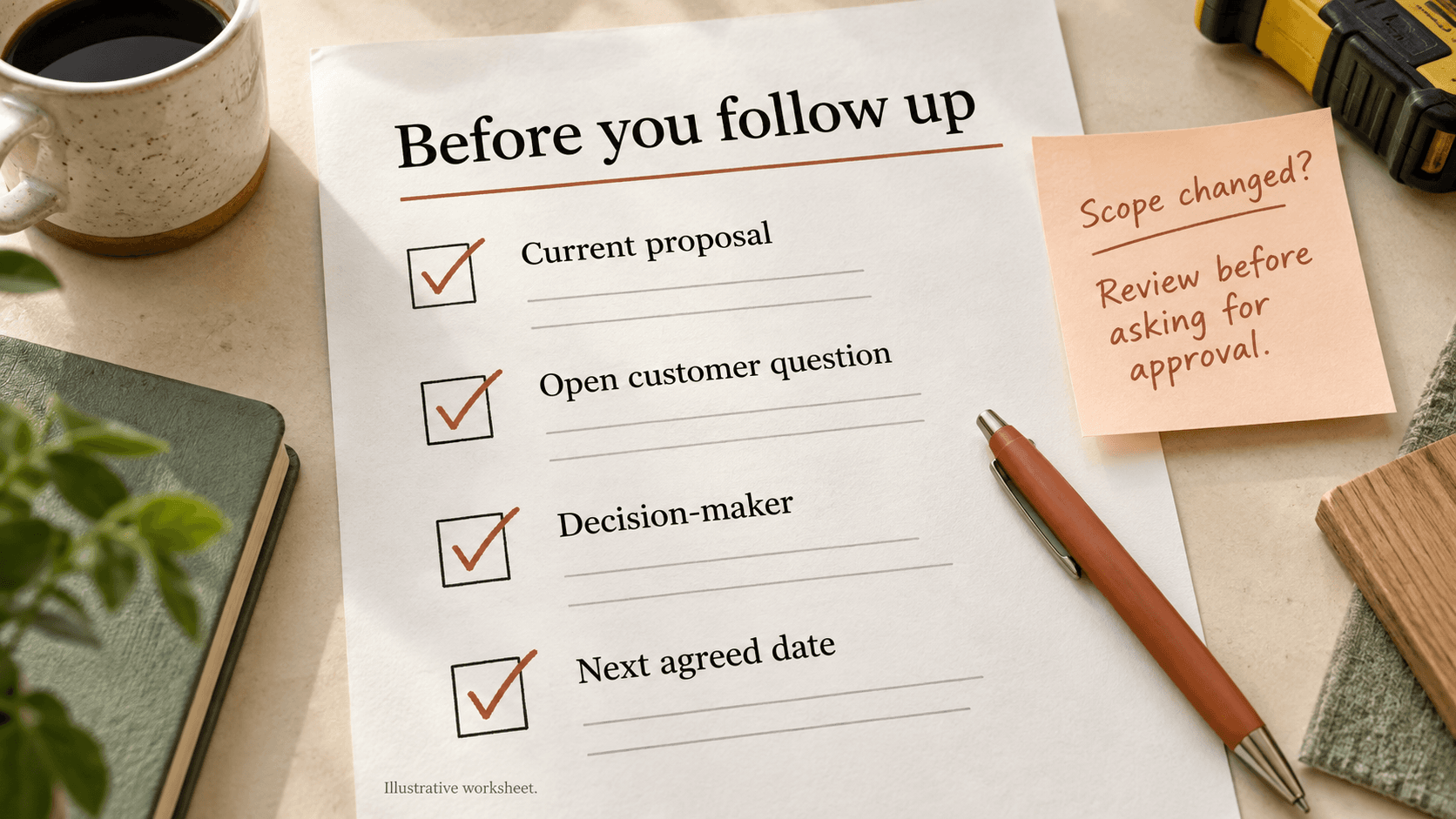
Stop any separate no-response sequence once a real conversation starts. If the customer booked by phone, do not send a text asking whether they still want to schedule. If they requested a scope change, do not continue asking them to approve the old proposal.

The handoff should include the request, what remains unresolved, who owns it, and the customer’s expected next update. Sending a notification does not prove the next person accepted responsibility.
Run a focused improvement test
Choose one source and one service type. Establish the current stages and review a sample of recent inquiries. Change the repeated failure—such as an unanswered inbox or unclear assessment wording—then compare a similar group of subsequent requests.
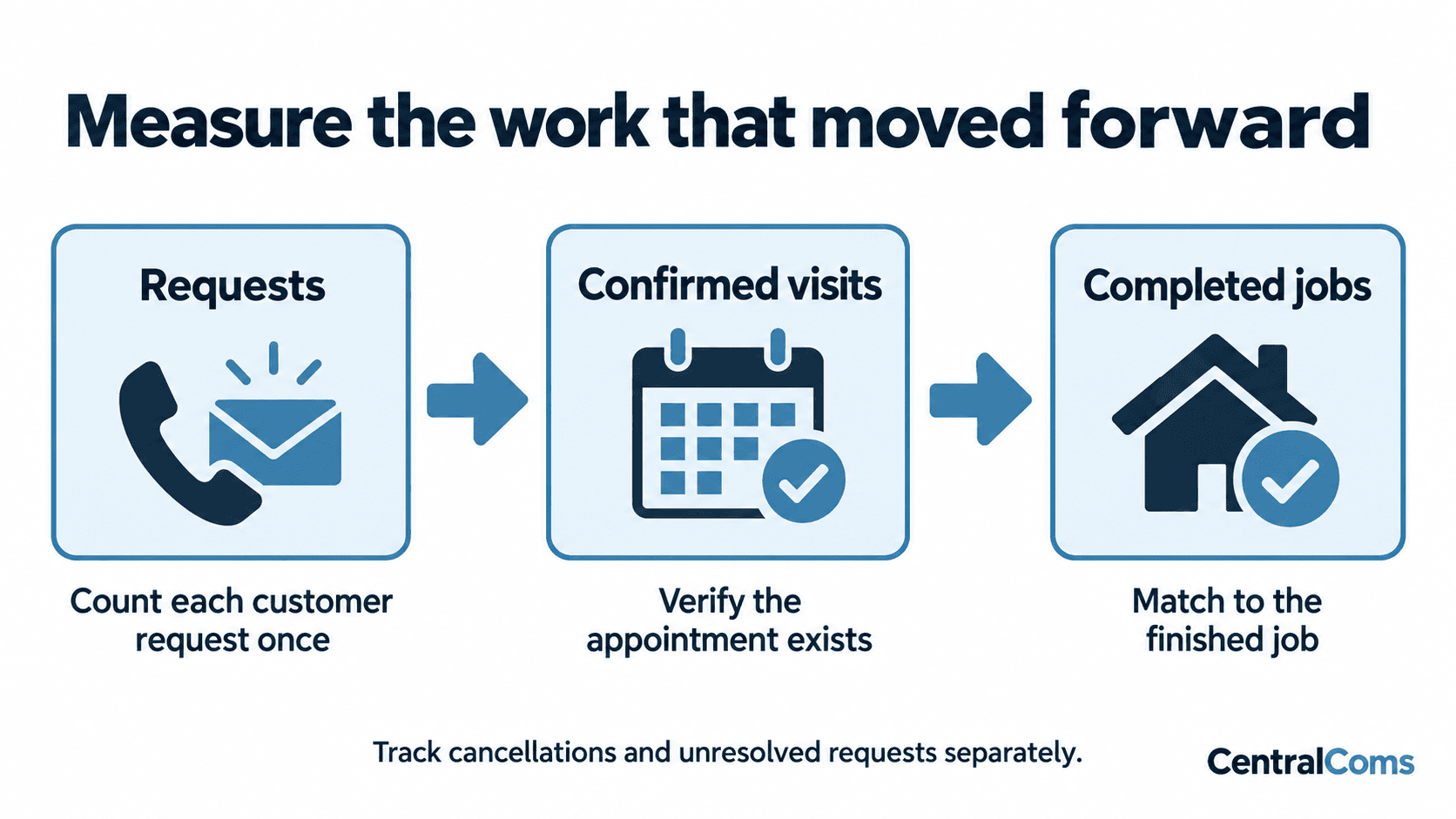
Keep traffic source, service mix, availability, and reporting window in view. If all of those changed at the same time, do not attribute every improvement to the new response tool. Track completed work and staff effort alongside bookings.
For AI, evaluate the full action: correct information, appropriate visit, confirmed record, and completed handoff. The AI receptionist comparison helps choose a provider, while call tracking explains how to measure the result.
Frequently asked questions
Is a five-minute response always the right target?
There is no universal target that fits every channel, service, and coverage period. Set a useful, achievable standard and measure actual customer help separately from automatic acknowledgments. Improve the slow cases your records reveal.
Should every qualified lead become an appointment?
No. Some customers need an estimate discussion, approval, or a later date. The aim is an appropriate next step and reliable follow-through, not forcing a booking that does not fit the request.
Why does our software conversion rate differ from our job report?
The systems may count different events or use different dates and denominators. A call threshold, quote creation, booking, and completed job are separate measures. Define the events before comparing percentages.
Sources and further reading
Sources checked . Check current plans and documentation before choosing a service.