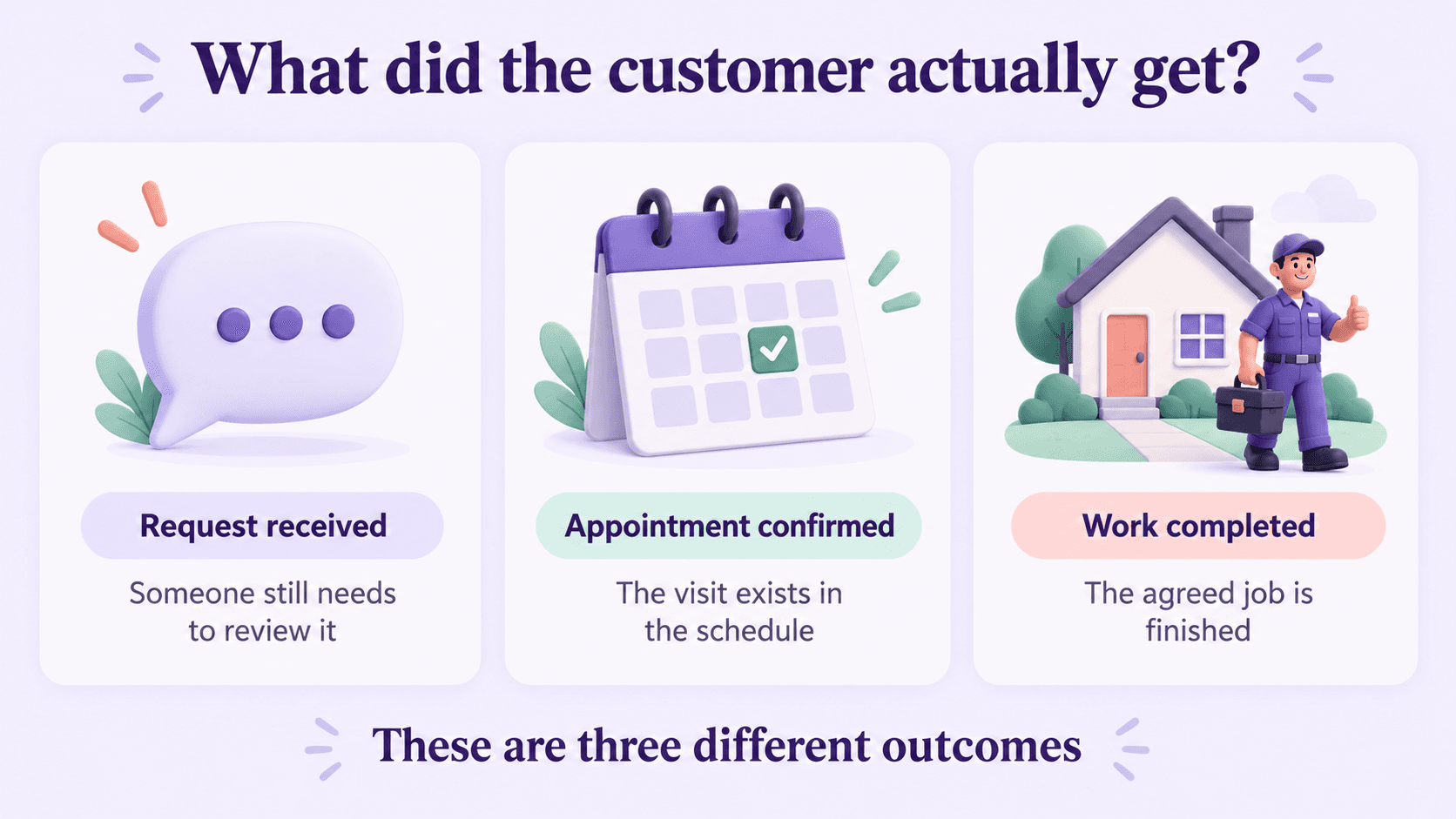
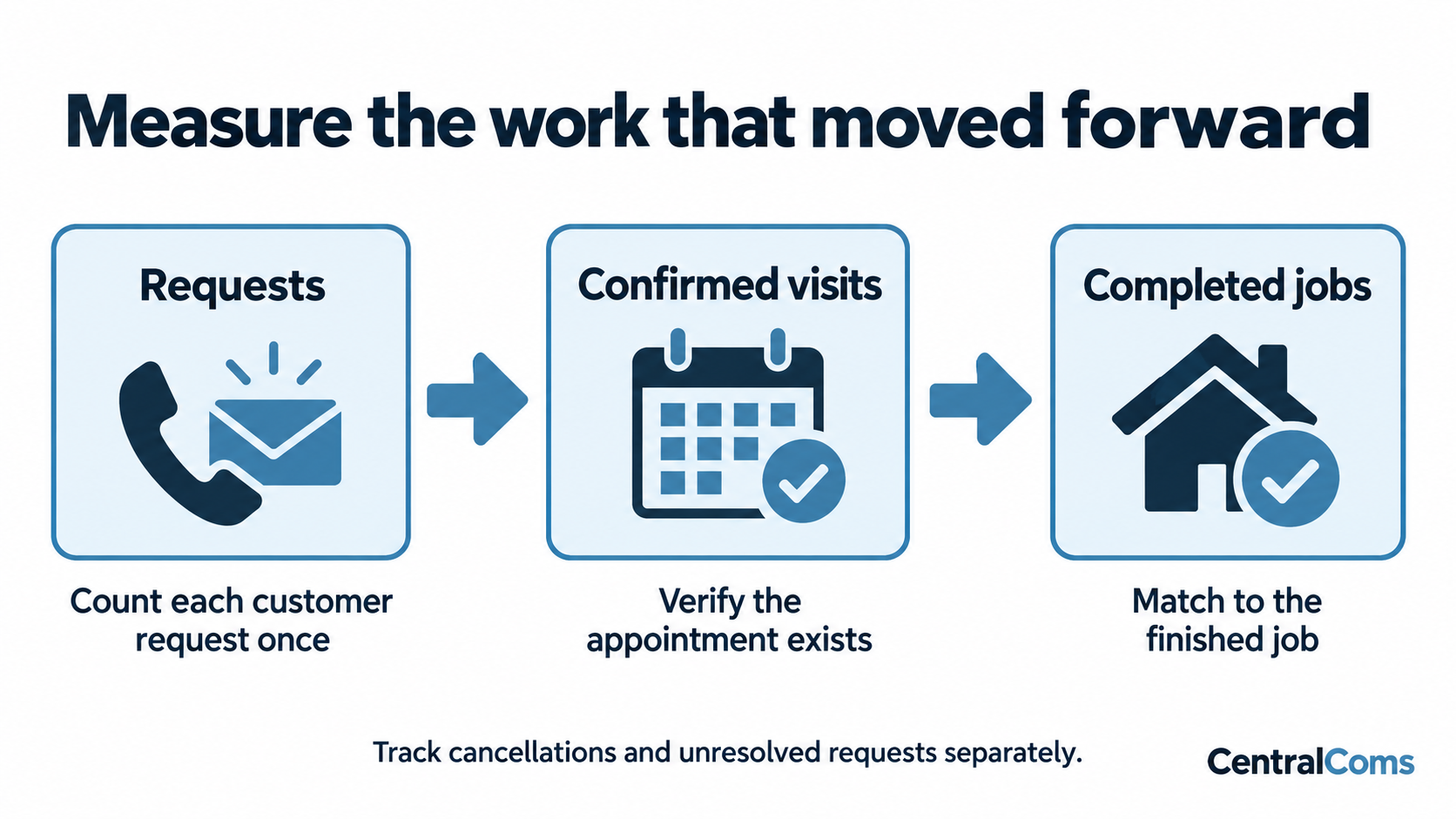
Home-service call tracking should connect a marketing source to the customer request and the job outcome. Track calls, qualified opportunities, bookings, and completed work separately. That lets you see whether a campaign brings the right customers and whether the business helps them progress.
A phone number report is a starting point. It cannot, by itself, explain whether a call was about a new job, a reschedule, an invoice, or a repeat attempt to reach the office.
Understand what the advertising report actually counts
Google Ads phone conversion tracking distinguishes several methods. A call lasting beyond a configured duration can count as a conversion. A click on a phone number on a mobile website can be tracked as a click without proving the call itself occurred. Imported outcomes allow a business to define more specific valuable actions.
That is why “50 call conversions” is not automatically “50 booked jobs.” Ask which conversion action is being reported, how it is triggered, and whether several actions can count the same opportunity more than once.
Google’s call-reporting documentation also explains that Google forwarding numbers are used for its reporting and should not be treated as permanent business numbers for unrelated placements. Keep number ownership, routing, and source attribution clear when combining tools.
Build a measurement chain your office can maintain
| Record | Essential information | Connection to the next stage |
|---|---|---|
| Campaign | Source, offer, service, reporting period | Identifies the marketing effort |
| Call or message | Time, contact identifier, channel | Links to the customer request |
| Opportunity | Requested work, service fit, owner | Groups repeat contacts about the same job |
| Appointment or proposal | Confirmed visit or current quote | Records a meaningful commercial step |
| Completed job | Completion, revenue, relevant costs | Shows the result of the opportunity |
Use identifiers from the systems you already operate. The objective is a traceable path, not another spreadsheet the team must rebuild every week. Start with one source if connecting the whole business at once would create unreliable data.
Keep repeat calls without counting extra demand
Suppose a homeowner submits a form, calls later, and then texts to arrange an assessment. There are three contact events and one project opportunity. Keep the events for response analysis, but group them for acquisition reporting.
The same phone number can also represent genuinely different jobs. Do not merge every contact forever just because the number matches. Use the service request, property, job record, and timing to determine whether the contact belongs to an existing opportunity.
Existing-customer calls still matter. A reschedule, invoice question, or service concern consumes communication capacity and affects the customer experience. Report those separately rather than calling them bad marketing leads or deleting them from the workload.
Choose conversion events that match your decision
If the campaign sells routine service, a confirmed visit may be a useful intermediate measure. If it sells a larger project, an assessment and accepted proposal may matter before completed installation. Define each event and keep the final outcome available for review.
Google’s measurement guidance describes importing call outcomes from an external system, including sales and other valuable actions. Whether you use that approach depends on your tracking setup, available identifiers, and data quality. Have the person managing measurement verify the integration before changing bidding around a new event.
Do not send duplicate representations of the same outcome into reporting and then add them together as if they were separate jobs. Also avoid assigning the full job value to every intermediate event in a journey. The report should make its attribution and value rules explicit.
Read the cost report with consistent denominators
Calculate cost per inquiry, cost per qualified opportunity, and cost per completed job separately. Use net campaign spend under a stated rule. Decide whether creative, agency, and communication costs are included, and use that same definition when comparing channels.
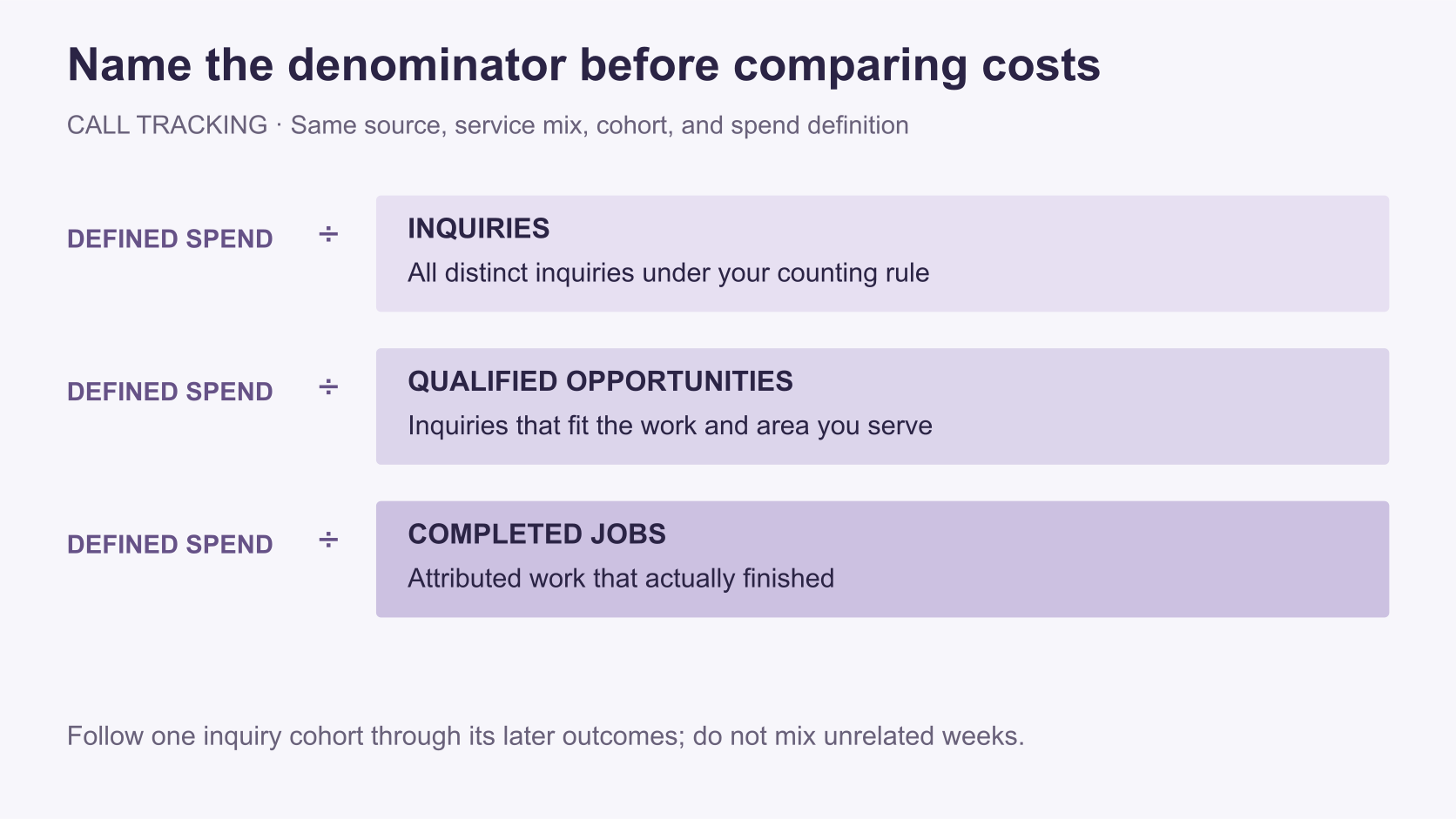
Cost per lead alone can point you toward the wrong campaign because it does not account for qualification or completed work. Also compare service mix and job economics. A source that produces larger projects may need more time to show completed work, while a repair campaign may mature sooner.
Do not compare this week’s spend with all jobs completed this week unless you intend that accounting view. Some completed jobs came from earlier inquiries. A lead-cohort view follows inquiries from the same period through their later outcomes; a cash or operations report answers a different question.
Keep attribution uncertainty visible
A customer may see a van, hear a referral, search your name, and then call from an ad. Last-touch reporting assigns a source under a rule; it does not prove the other exposures had no influence. Preserve a customer-reported source when useful without pretending it is always precise.
Missing identifiers and unmatched jobs should have an “unknown” category. Do not quietly distribute them across successful campaigns. Review why the connection is missing and improve the process that records the request.
For Local Services Ads, preserve the platform lead record and billing status. For operational improvement, use the lead-conversion stages rather than expecting attribution software to diagnose every failed booking.
A weekly review that leads to action
- Check unmatched contacts and duplicate opportunities before reading channel performance.
- Compare qualified demand and completed work by service, source, and a suitable time window.
- Read a small sample of stalled inquiries to explain the numbers.
- Assign one change to targeting, the page, response, or booking rules based on the evidence.
- Record the change so the next review can distinguish it from seasonality or capacity changes.
Frequently asked questions
Is a long phone call a good conversion?
It can be a useful signal, but duration does not establish that the caller booked or bought. A long complaint and a long project consultation are different events. Use the customer and job outcome to interpret the call.
Can we track calls without recording their audio?
Some measurement relies on routing, timestamps, source identifiers, and job records rather than audio. Choose the capabilities your reporting needs and apply the appropriate privacy and recording rules to any recording you enable.
Why do marketing and accounting reports disagree?
They may use different dates, attribution rules, value definitions, and event types. Reconcile those definitions before deciding one is wrong. A booking report and a collected-revenue report are supposed to answer different questions.
Sources and further reading
Sources checked . Check current plans and documentation before choosing a service.