The strongest HVAC marketing plan separates repair demand, replacement shopping, and planned maintenance. Those customers have different questions, different timelines, and different appointments to book. One offer and one landing page rarely explain all three well.
A customer whose system stopped cooling wants to know whether you serve their address and can help. A homeowner considering replacement wants to understand the assessment and compare proposals. A maintenance customer may simply need a relevant reminder at a convenient time. Build the campaign around that difference.
For channel selection and campaign measurement across the business, start with the home services marketing plan. This guide focuses on the three different HVAC buying situations.
Start with three campaigns, not one general offer
| Buying situation | Campaign promise | Appropriate next step | Result to measure |
|---|---|---|---|
| Current heating or cooling problem | Explain how to request service | An eligible repair visit or an honest callback | Completed repair work |
| Replacement consideration | Explain how the home and options are assessed | An assessment or estimator conversation | Accepted proposals and completed installations |
| Planned maintenance | Explain the included service and who it is for | A maintenance appointment | Completed visits and plan outcomes |
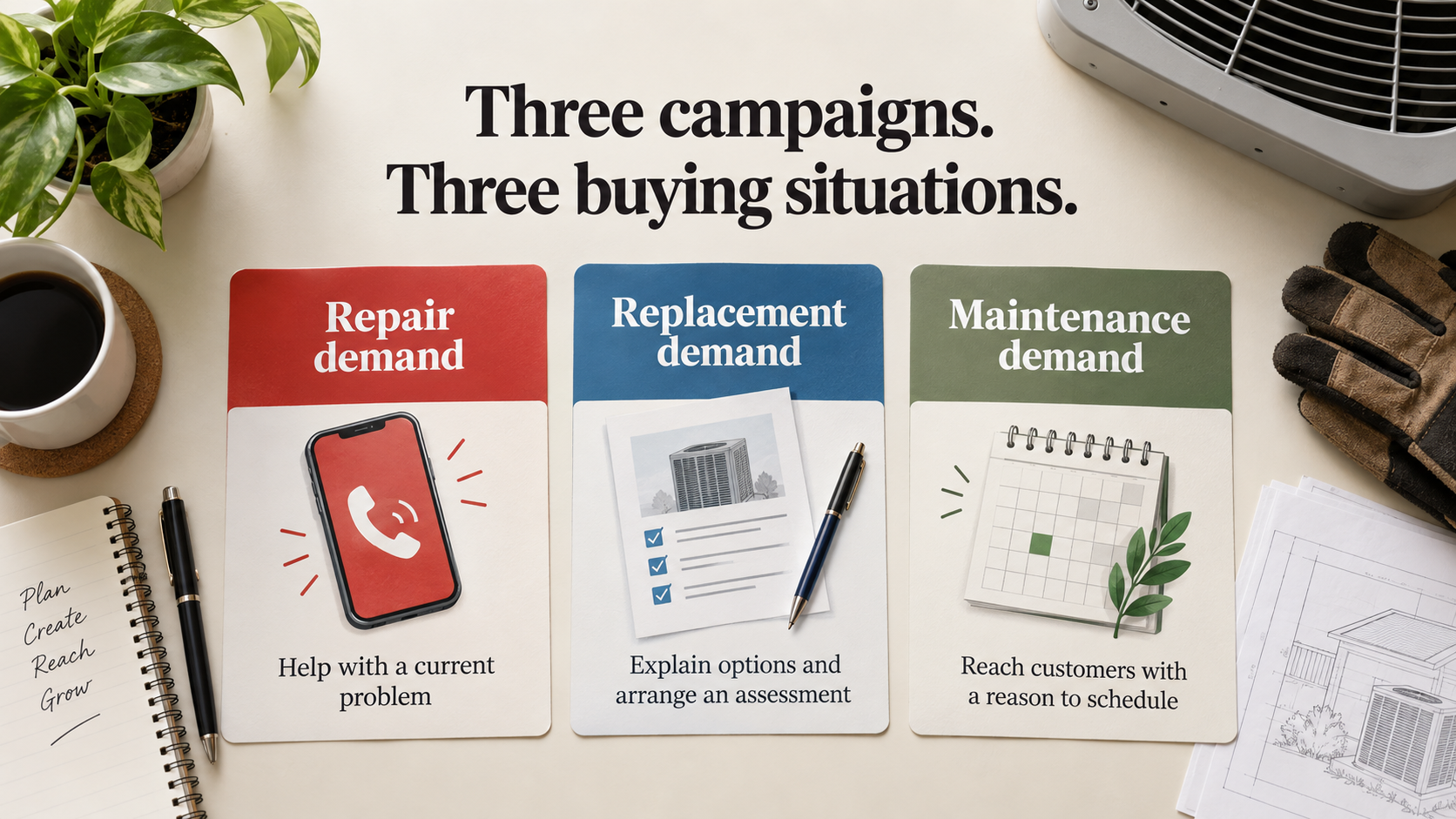
Keep those labels in the campaign report. Ten replacement assessments are not ten installations. Ten maintenance visits may fill the calendar but leave your replacement capacity unused. A useful marketing meeting asks whether the work generated fits the capacity you wanted to fill.
Build repair pages around a clear service request
A repair page should help the customer make contact without turning the page into remote diagnosis. State the systems and area you serve, how to request help, what an assessment involves, and what happens when no suitable appointment remains. Avoid a same-day promise that the schedule cannot support.
Use local search and eligible paid channels to reach people looking for that service. Google’s Local Services ranking guidance includes responsiveness and profile quality among the factors it considers. The practical implication is to review the receiving phone and inbox along with the ad. Changing campaign settings cannot fix an unanswered customer conversation.
Before a hot or cold weather spike, test an available appointment, a full schedule, and a request outside your area. Listen to the promise the caller hears. Your campaign should not keep offering immediate attendance after the last suitable slot is gone.
Give replacement shoppers something worth comparing
ENERGY STAR’s contractor guidance encourages homeowners to expect a home evaluation and written, itemized estimates. It also tells them to compare efficiency and warranties. A replacement campaign should make that evaluation understandable rather than jump straight to a low headline price.
Explain what happens during an assessment, what information the homeowner can share, and how the proposal will be discussed. Use actual project examples with permission. Answer practical questions about the appointment and proposal; have the qualified team handle equipment selection and technical claims.
A helpful page might explain: “We’ll review your current system and comfort concerns, then talk through the options that fit the home.” It should not imply that square footage or equipment age alone determines the replacement. Nor should an ad advertise a rebate or financing term unless your team has verified the current offer and eligibility.
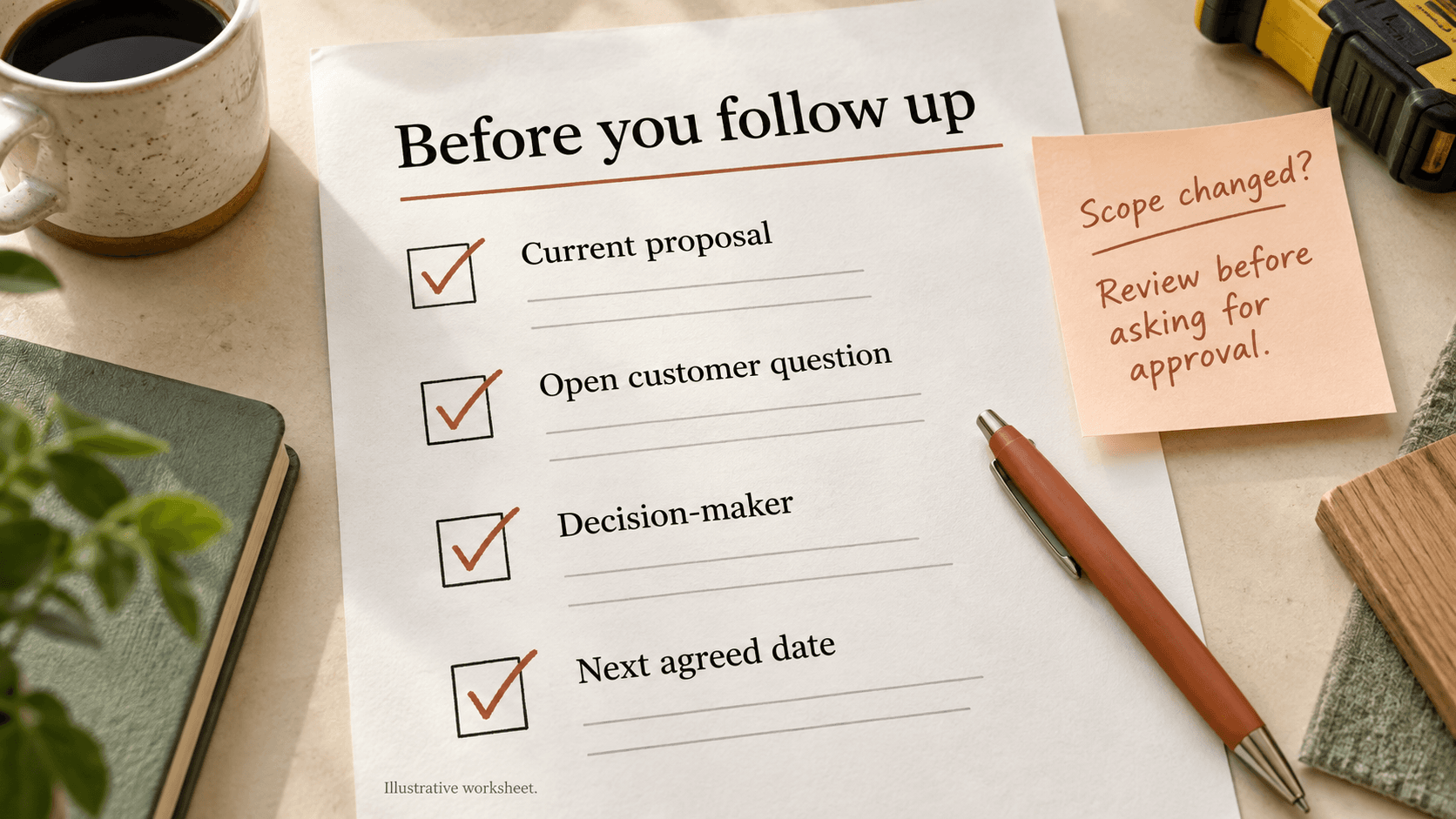
After the proposal, keep the marketing source attached to the customer record. The estimate follow-up guide shows how to handle scope questions, timing, revisions, and decisions without repeating the same reminder.
Use maintenance campaigns to build planned demand
ENERGY STAR’s maintenance checklist recommends contractor check-ups before peak heating and cooling seasons. That supports useful educational content about preparing for the season. It does not establish that every person in your database has the same equipment, interval, or service due.
Start with records that give you a real reason to contact the customer: an included plan visit, an agreed check-back date, or a reviewed service recommendation. Then remove work already booked or completed. Describe the actual visit and make it easy to arrange.
Housecall Pro’s service-plan reminder documentation distinguishes scheduling reminders from renewal reminders. That distinction matters in your copy too. A customer entitled to a visit should not have to work out whether you are asking them to book it or buy another agreement. For audience selection and campaign measurement, use the HVAC maintenance marketing guide.
Choose the channel after the offer
Local search is a sensible foundation for services customers actively seek. Keep the Business Profile accurate and make the service page useful. Paid search can test a specific replacement or repair offer. Existing-customer email and text can support a documented maintenance campaign through your approved contact process.
Do not assume the same creative works everywhere. A repair search ad needs immediate service clarity. A replacement article can explain a longer decision. A maintenance message should recognize the existing relationship. A general brand campaign can support familiarity, but its effect will not necessarily appear as a direct last-click booking.
See local SEO for contractors for the search foundation and Local Services Ads for handling paid inquiries.
Plan around capacity before sending the campaign
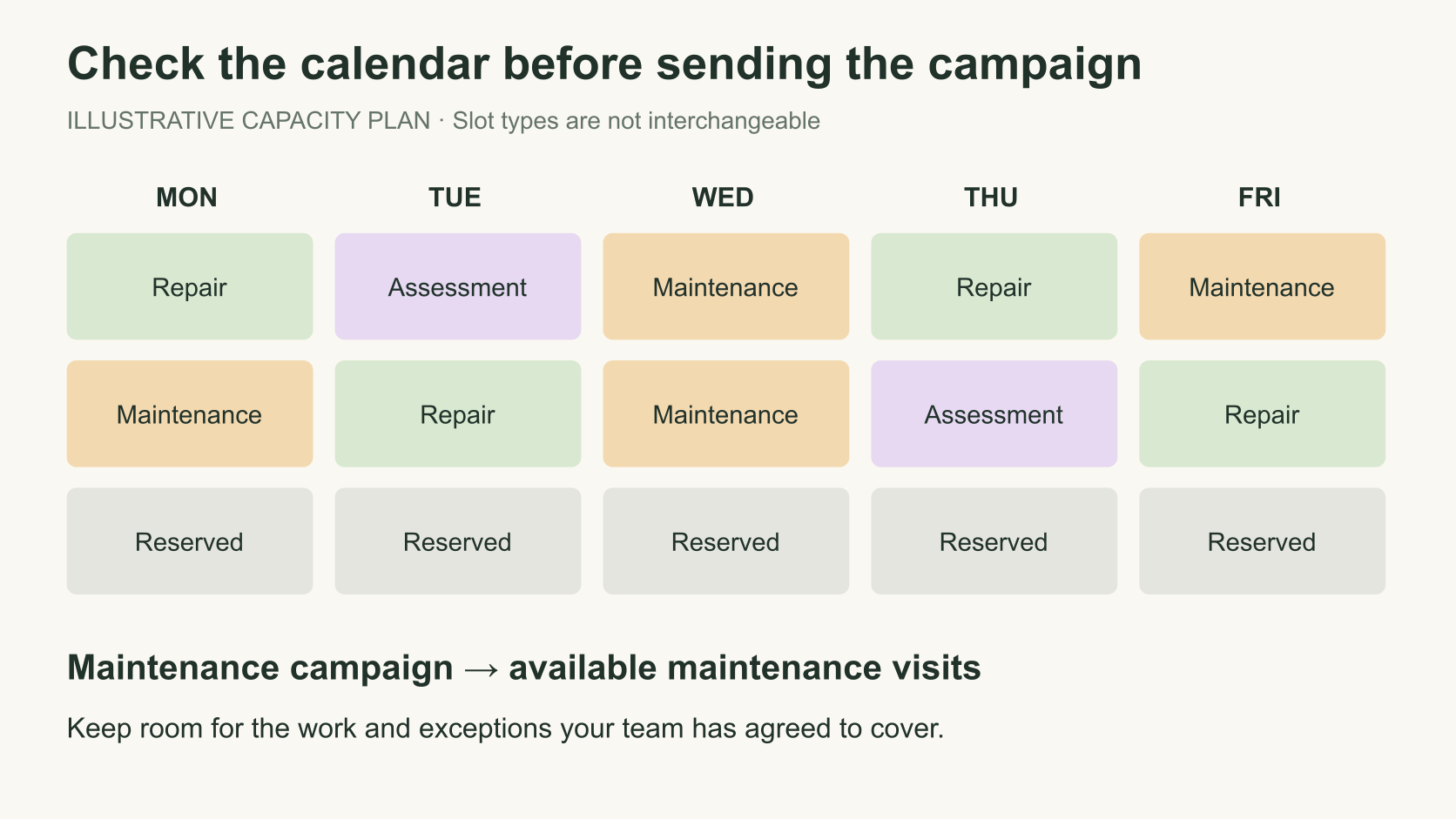
Pick the available visit type, areas the team can cover, and the number of appointments you can reasonably accept. Assign someone to watch replies and someone to change the campaign when capacity changes. A campaign that fills the wrong schedule creates rebooking work and disappointed customers.
An illustrative pilot might target one group of plan customers with available visits in one service area. Send a small batch, review replies, and check whether the appointments fit the schedule. Only expand once you know the offer, response, and scheduling path all work together. The batch size should come from your own capacity and expected response, not a generic recommendation.
Measure each campaign through its real sales cycle
For repair campaigns, connect inquiries to completed service work. For replacement campaigns, follow assessment, proposal, acceptance, and installation. For maintenance, separate included visits, paid tune-ups, new memberships, and renewals.
Use the same time window when comparing cohorts and leave time for open proposals to mature. Report pending decisions separately from losses. Review acquisition cost alongside direct job economics, cancellations, and the time staff spend repairing bookings. That tells you more than a single blended “conversion rate.”
Frequently asked questions
What should an HVAC company advertise during a slower period?
Start with the capacity available and the customers you have a reason to contact. Planned maintenance, open replacement decisions, and relevant existing-customer work can suit a slower period. The offer must match the actual record and schedule.
Should repair and replacement ads use separate pages?
Usually they benefit from different explanations and next steps. A repair customer needs service availability; a replacement shopper needs confidence in the assessment and proposal. Keep both paths easy to find from the main website.
Can AI help with HVAC marketing?
It can support the conversations campaigns generate, subject to the product and your setup. Test service classification, booking availability, and estimator handoffs. Use the AI appointment-booking guide to evaluate the actual action taken.
Sources and further reading
Sources checked . Check current plans and documentation before choosing a service.