AI vendors tend to describe their products in terms of what will be possible soon. It is more useful to know what works now, in a real office, with real customers on the line.
What it does well
Answering and qualifying: picking up every call and text, asking the questions your CSR would ask — issue, urgency, address, availability — and keeping a clean record of the answers. This is the most mature part of the stack, and it is genuinely good.
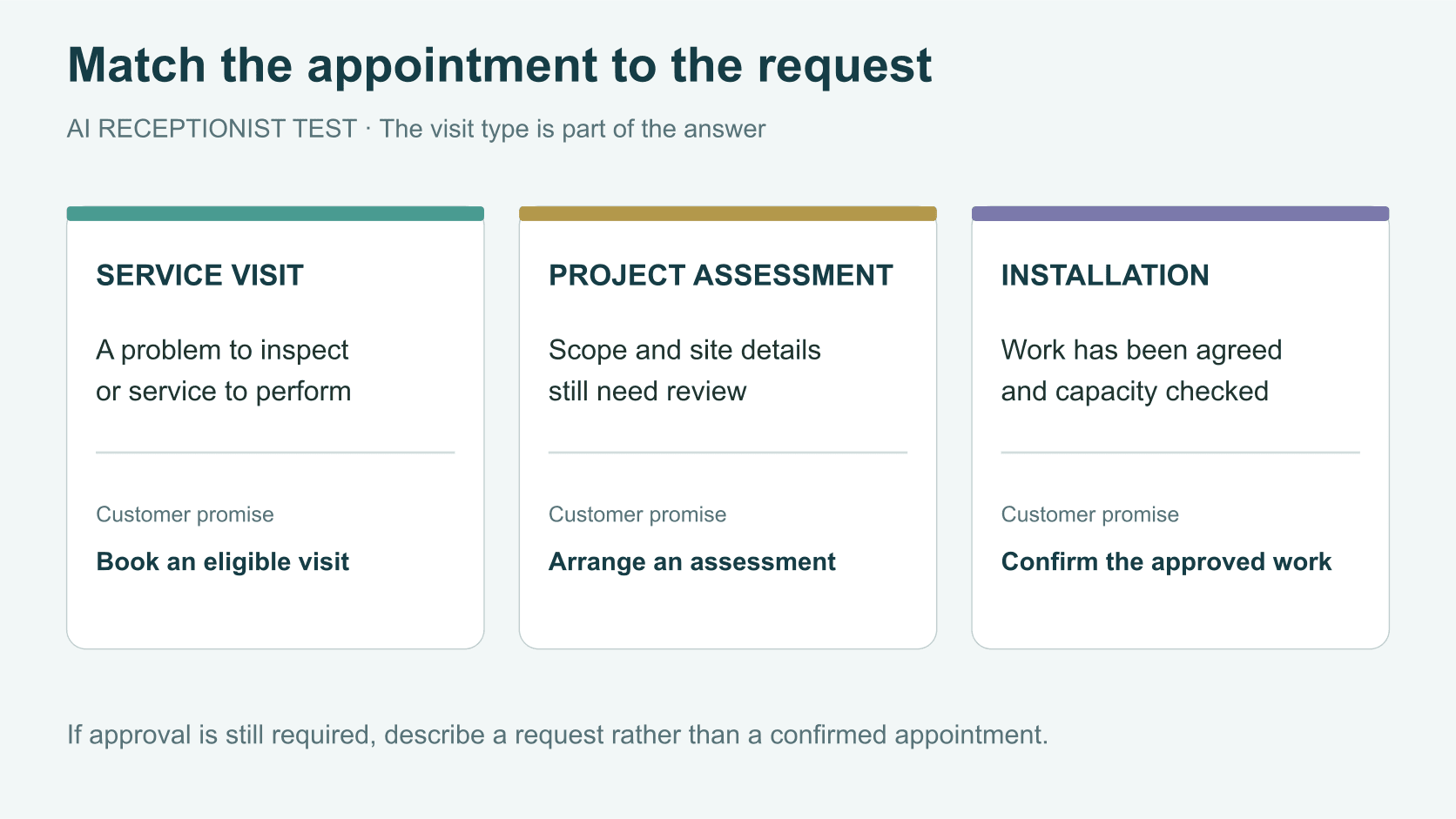
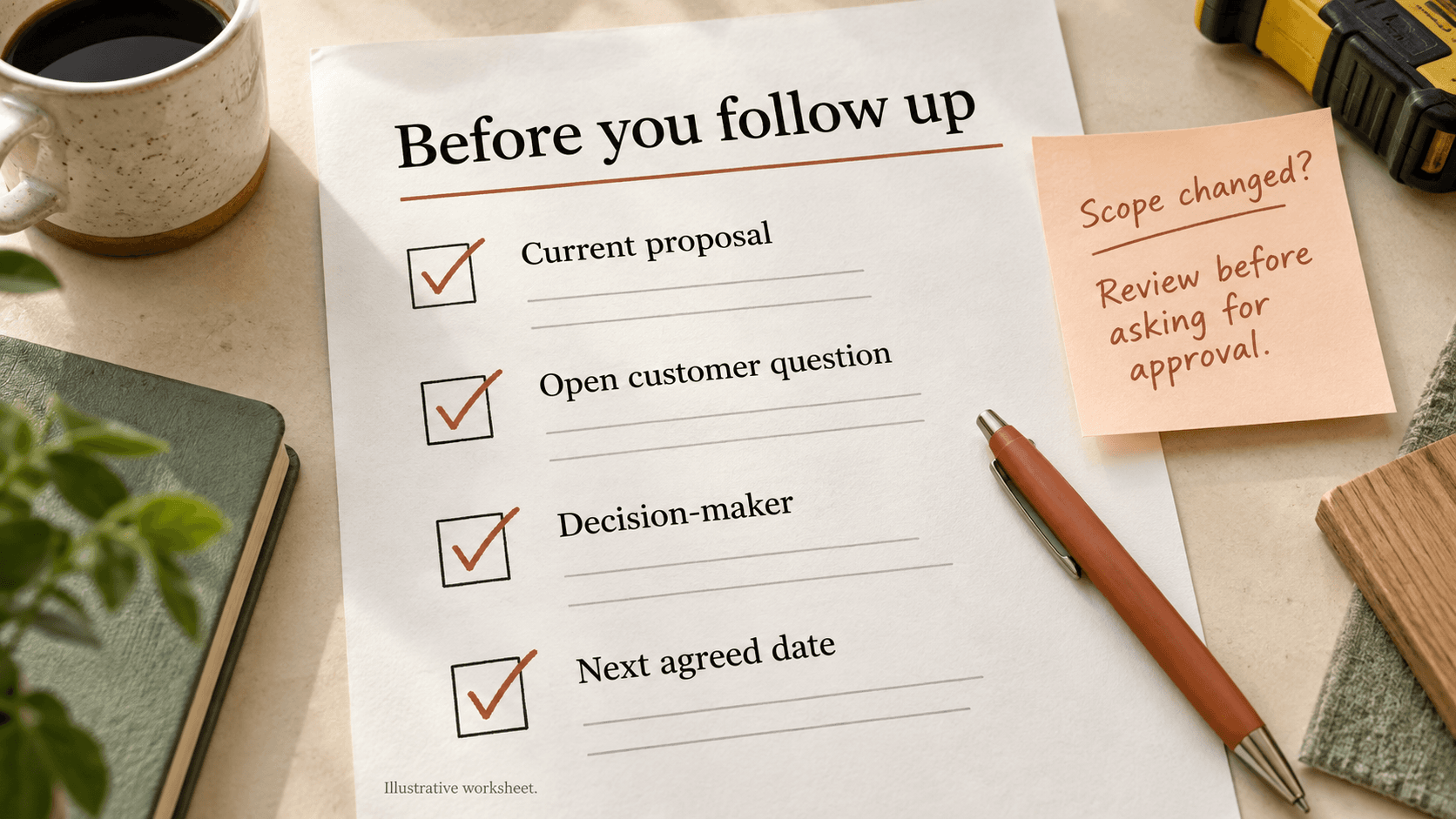
Booking against a live calendar: offering time slots that actually exist, respecting job-length estimates, and confirming in the same conversation. Follow-ups are the other strong suit — unsold estimates, review requests after completed jobs, maintenance reminders. These are tasks where consistency beats judgment, and software is more consistent than any human on their busiest day.
What it should not do
It should not diagnose. "My furnace is making a noise" has a dozen causes and the AI has not heard the noise. It should not price unusual work — custom jobs, multi-visit projects, anything where the honest answer is "we need to look at it." And it does not replace the person who runs your office; it removes the part of their day that was repetitive phone triage.
A vendor that claims otherwise is overpromising, and overpromised AI is how companies end up with horror stories.
The practical takeaway
Draw the line deliberately: let AI carry the routine volume, and route judgment calls to people. Teams that draw that line well get the coverage without the risk — and they usually find the line moves further than they expected once they trust what is on the other side of it.