A homeowner with a dead water heater calls three companies. The first one that answers and offers a time usually gets the job. The other two never find out they were even in the running — there is no lost-job report for a call that rang out at 7:40 pm.
That is what makes missed calls quietly expensive. A lost estimate shows up in your numbers. A missed call does not show up anywhere. It just looks like a slow week.
Why good teams still miss calls
It is not a discipline problem. Your best people are on ladders, under sinks, and driving between jobs. The office closes at five; homeowners notice their problems at seven. The math has never worked: demand arrives around the clock, and humans answer during business hours.
For decades the fix was voicemail, then an answering service that took a message. Both push the real work — calling back, qualifying, scheduling — to the next morning, when the caller may have already booked someone else.
What actually changes with an AI front office
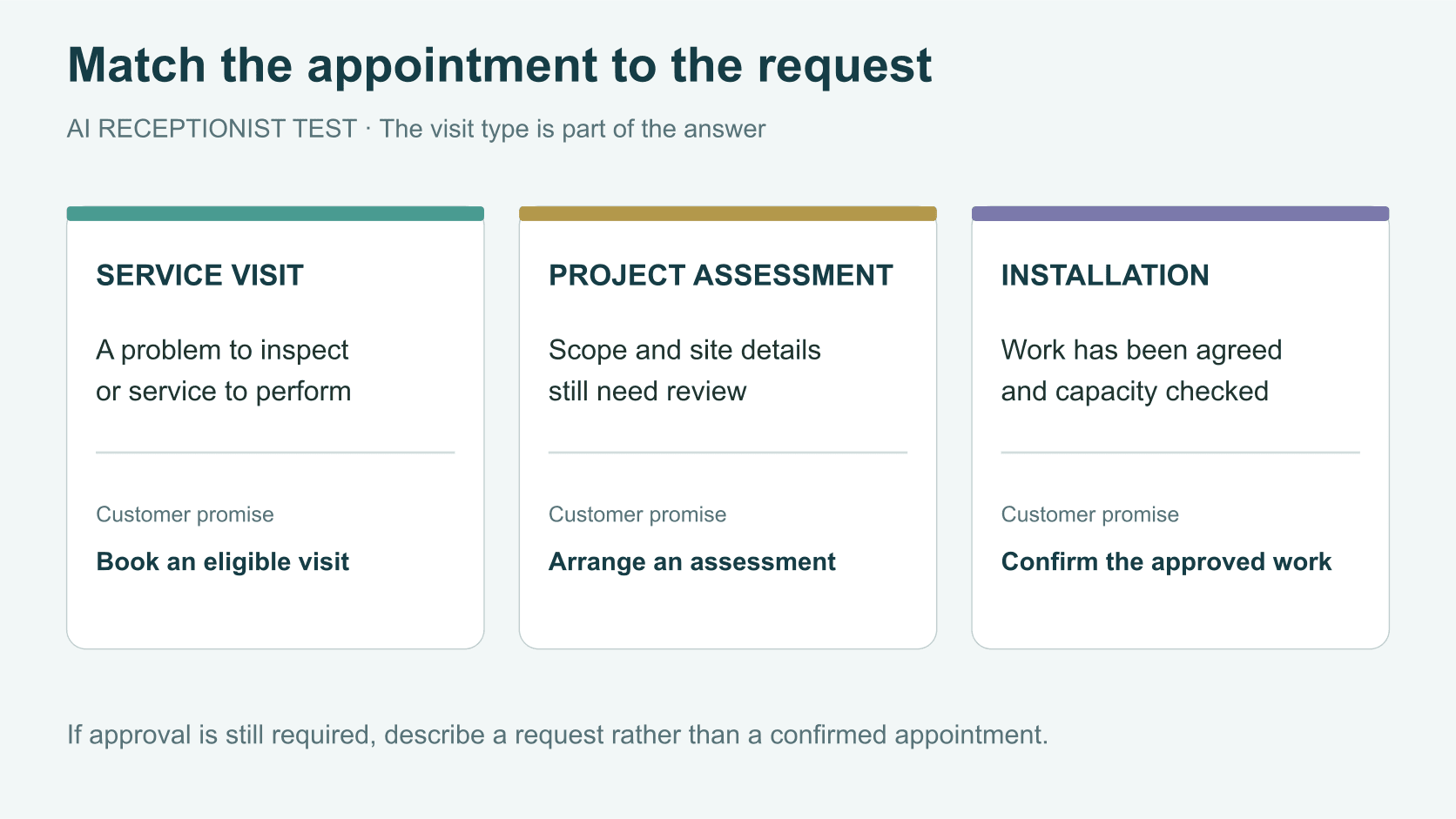
Modern AI answering does not just take the message. It holds the conversation: what is the issue, how urgent is it, where is the property, and — if the request is routine — it offers a real time from your calendar and books it. The caller gets an answer at 7:40 pm instead of a callback at 9 am.
To be clear about the limits: it will not diagnose the water heater, and complex or unusual requests should still land with a person. But the routine calls — which are most calls — stop leaking. Shops that have set this up do not usually describe it as a growth hack. They describe it as finally seeing the demand that was always there.