Ask a shop owner why they do not use templates and the answer is almost always the same: every job is different. A slab leak is not a water heater swap. A lockout at midnight is not a rekey on a Tuesday. That is true, and it is also the reason most service businesses spend their evenings retyping the same sentences.
The job is different. The paperwork around the job is not. The questions you ask on the first call, the shape of the estimate, the confirmation text, the “on my way” message, the follow-up when a quote goes quiet, the invoice, the review request. None of those change much from one customer to the next. Only the details do.
Where the hours actually go
Watch a small shop for a week and the pattern shows up fast. Someone answers a call and asks the same six intake questions they asked on the last call, from memory, in a slightly different order. Someone opens a blank document to write an estimate and rebuilds the header, the scope and the terms before they get to the one thing that matters, the price. Someone types a confirmation text by thumb, then an “on my way” text, then a “how did we do” text, each one a little different, some of them forgotten.
None of these take long on their own. Together they are the reason the office runs late and the reason follow-ups slip. A quote that goes out at 9 pm because it was written from scratch is a quote the customer reads after they have already booked someone else.
Every quote has the same bones
Look at the last ten estimates you sent. They have an opening line, a description of the problem, the work you are going to do, the line items, the price, and your terms. The structure barely moves. What moves is the customer’s name, the address, the problem in their words, and the numbers.
That split is the whole idea behind a template. Build the part that stays the same once. Leave a blank for everything that changes. A good template is not a script that makes you sound like everyone else. It is the eighty percent of the document you have already written a hundred times, saved so you only write the twenty percent that is actually about this job.
What to template first
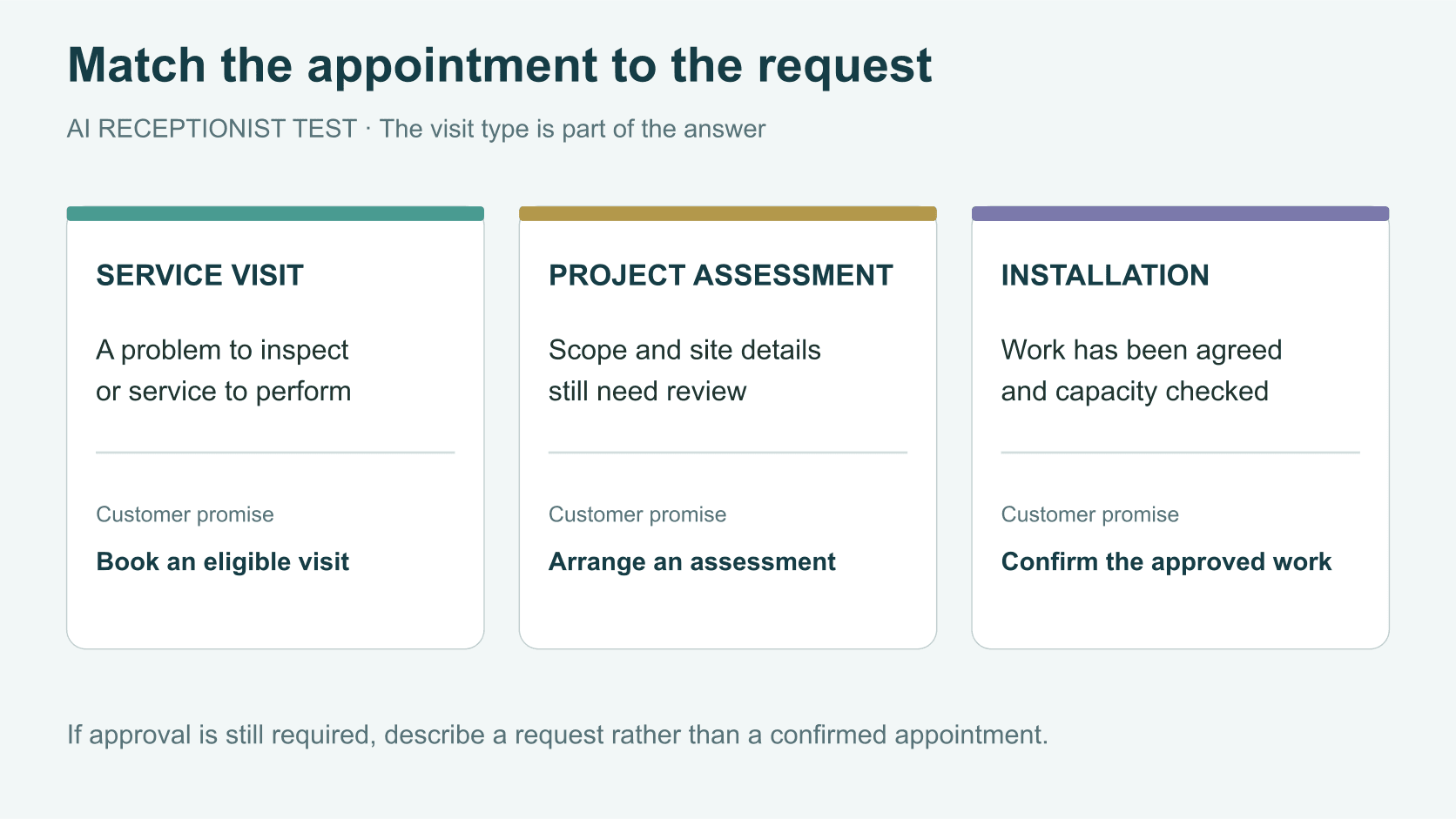
Start with intake. For each kind of job you take, write down the questions a good coordinator would ask before booking: what is happening, since when, where in the property, is anything leaking or unsafe right now, who is the point of contact, when can someone be there. One list per job type. Anyone who answers the phone, or anything that answers the phone, asks the same questions in the same order, and nothing gets missed.
Then the estimate. Take your most common job and save the version you send most often, with placeholders where the name, address, scope and price go. If you have three or four standard packages, save each one. The next estimate starts from the closest match instead of from a blank page.
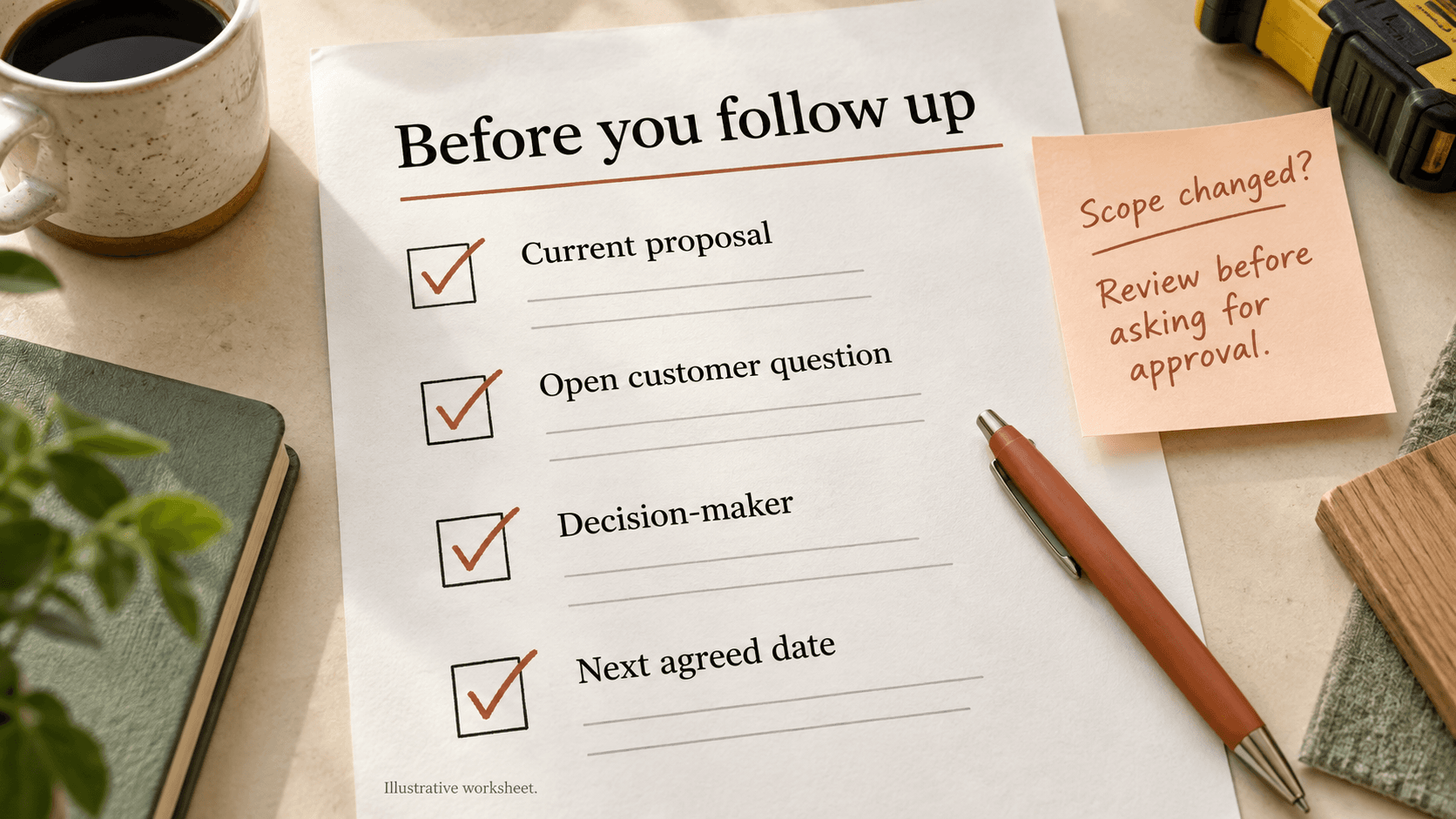
Then the messages around the visit. A booking confirmation with the date, the window and what the customer should have ready. An “on my way” text with the technician’s name. A follow-up for a quote that has not been answered in three days. A review request after the job closes. Each is two or three sentences, written once, with a blank for the details.
What to leave blank
The fear is that a template flattens the thing that makes your business yours. It only does that if you fill in every field. Leave one real blank in every template: a line for the note that only this customer needs. The reminder that the side gate sticks. The mention that you remember their dog’s name. The template carries the parts that must be right every time so you have the attention left for the part that makes them call you again.
The same goes for pricing. A template should carry your standard rates and your usual line items. It should not decide the number. A person who has seen the job sets the price, every time.
What should fire on its own afterwards
This is where templates stop being a typing shortcut and start changing how the office runs. Once the estimate is built from a template, everything downstream can be built from the same job record. The customer accepts the quote, and the confirmation goes out with the details already filled in. The visit is on the calendar, so the reminder goes out the day before and the “on my way” text goes out when the technician leaves the previous job. The job closes, so the invoice and the review request follow.
Nobody has to remember any of it, which is the point. The follow-ups that slipped were never a discipline problem. They were a memory problem, and templates plus a trigger fix memory problems.
Where an AI front office fits
An AI answering service is, in practice, a template that talks. Give it the intake list for each job type and it asks those questions on every call, at 7 am and at 11 pm, and writes the answers into the job record. Give it your confirmation and follow-up templates and it sends them with the blanks filled from the conversation it just had. The parts that stay the same, it carries. The parts that change, it collects.
It still does not price the work, and it should hand anything unusual to a person. But the routine calls, which are most calls, arrive in the office already 80% done: the questions asked, the record written, the confirmation sent. The estimate is the twenty percent that is left, and it starts from your template, not from a blank page.
Every job is different. Stop rewriting the parts that are not.