Ask a general-purpose chatbot what a water heater replacement costs and it will give you a national average with total confidence. That answer is useless to your customer and dangerous to your margins. The distance between a demo and a deployment is exactly this: does the AI answer from the internet, or from your business?
What grounding means in practice
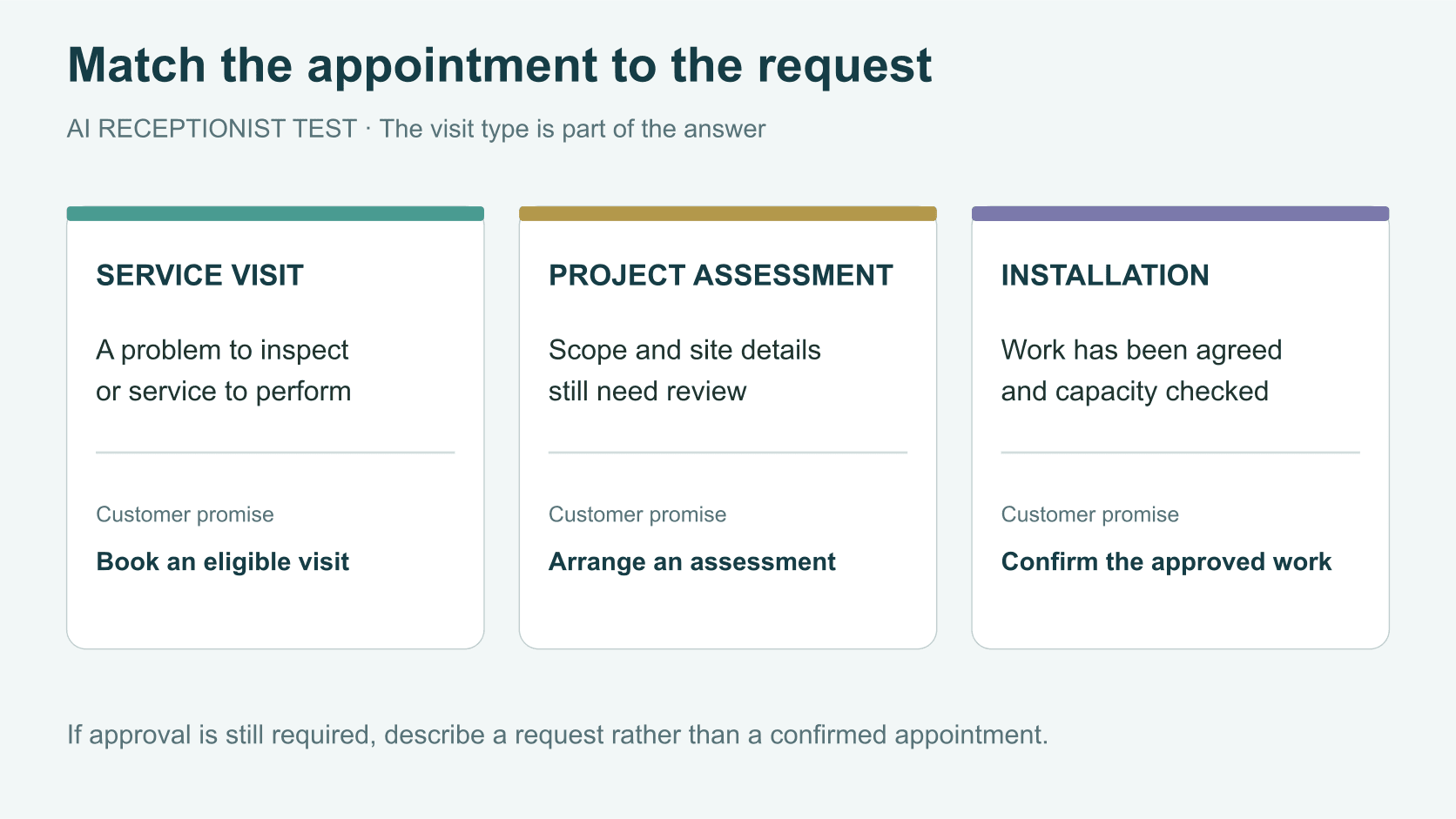
A grounded front office quotes from your price book, offers your services and not ones you do not sell, books at job lengths you have set, and follows your rules about what books itself and what waits for approval. When it does not know something, it says so and escalates — which is the correct behavior, not a shortcoming.
What setup actually involves
Honest answer: some work. You will need to write down your services, prices, service area, and scheduling rules — the knowledge that currently lives in your office manager’s head. For most shops this is a few focused sessions, not a months-long project. The uncomfortable discovery is usually that this knowledge was never written down anywhere, and the business depended on one person remembering it.
That is the quiet second benefit of the setup: the business gets documented. The AI is simply the first employee that forced the issue — and unlike a new hire, you only train it once.
Garbage in, garbage out still applies. Feed it a stale price list and it will quote stale prices politely. Keep the source of truth current, and the answering, booking, and follow-up compound on top of it from then on.